Gastroesophageal Junction
The gastroesophageal junction is a vital anatomical and functional region connecting the esophagus to the stomach. Its proper operation is crucial for digestion and preventing the reflux of stomach contents.
Key Takeaways
- The Gastroesophageal Junction (GEJ) is the critical transition zone between the esophagus and the stomach.
- Its primary role is to regulate the passage of food into the stomach and prevent the backflow of gastric acid.
- Key anatomical components, including the lower esophageal sphincter and the diaphragm, contribute to its barrier function.
- Dysfunction of the GEJ can lead to common conditions such as gastroesophageal reflux disease (GERD) and hiatal hernias.
- Understanding the GEJ is essential for diagnosing and managing a range of digestive disorders.
What is the Gastroesophageal Junction?
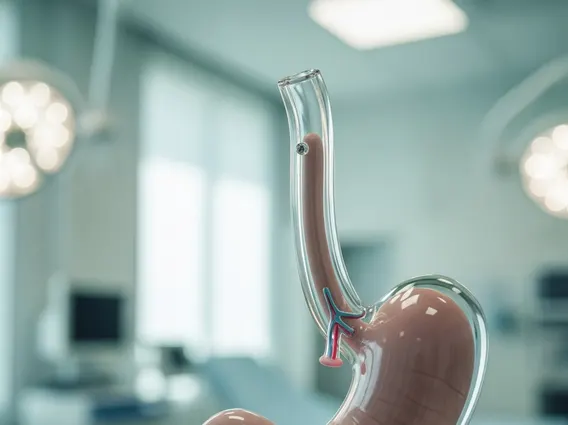
The Gastroesophageal Junction (GEJ) is the critical anatomical point where the tubular esophagus meets the sac-like stomach. This specialized region marks the end of the esophagus and the beginning of the cardia, the uppermost part of the stomach. Its structure is uniquely adapted to perform a dual function: allowing swallowed food and liquids to pass into the stomach while simultaneously preventing the reflux of acidic stomach contents back into the esophagus.
This junction is not merely a simple connection but a complex physiological barrier. Its integrity is maintained by a combination of muscular and diaphragmatic mechanisms, which work in concert to ensure unidirectional flow of food. When these mechanisms are compromised, it can lead to various digestive health issues, impacting a person’s quality of life.
Anatomy and Function of the Gastroesophageal Junction
Understanding the gastroesophageal junction anatomy reveals a sophisticated arrangement of structures designed for its critical role. The primary muscular component is the lower esophageal sphincter (LES), a ring of muscle that is physiologically, rather than anatomically, distinct. The LES relaxes during swallowing to allow food passage and contracts at rest to prevent reflux. Surrounding the LES is the diaphragm, specifically the crural diaphragm, which acts as an external sphincter, providing additional pressure to reinforce the barrier.
The primary gastroesophageal junction function is to act as an antireflux barrier. This is achieved through several mechanisms:
- Lower Esophageal Sphincter (LES) Pressure: The intrinsic tone of the LES creates a high-pressure zone that resists the upward flow of stomach contents.
- Crural Diaphragm: The diaphragm wraps around the esophagus at the GEJ, adding extrinsic compression that strengthens the barrier, especially during activities that increase abdominal pressure like coughing or bending.
- Angle of His: The acute angle at which the esophagus enters the stomach (the angle of His) creates a flap-valve effect, further aiding in reflux prevention.
- Esophageal Clearance: Peristaltic waves in the esophagus help clear any small amounts of refluxate that might escape the GEJ.
These components work synergistically to maintain the integrity of the junction, protecting the delicate esophageal lining from the harsh acidic environment of the stomach.
Common Gastroesophageal Junction Disorders
Several gastroesophageal junction disorders can arise when the complex mechanisms of this region malfunction. These conditions can range from mild discomfort to severe complications, significantly affecting digestive health. One of the most prevalent disorders is gastroesophageal reflux disease (GERD), which affects approximately 20% of the adult population in Western countries, according to the National Institute of Diabetes and Digestive and Kidney Diseases (NIDDK). GERD occurs when stomach acid frequently flows back into the esophagus, irritating its lining.
Other common disorders include:
- Hiatal Hernia: This condition occurs when a portion of the stomach pushes upward through the diaphragm into the chest cavity, often weakening the GEJ’s barrier function and contributing to GERD.
- Barrett’s Esophagus: A serious complication of chronic GERD, where the normal esophageal lining is replaced by tissue similar to that of the intestine, increasing the risk of esophageal cancer.
- Esophageal Strictures: Narrowing of the esophagus, often due to chronic inflammation and scarring from severe reflux, which can make swallowing difficult.
- Esophageal Cancer: While less common, certain types of esophageal cancer, particularly adenocarcinoma, are strongly associated with long-standing GERD and Barrett’s esophagus at or near the GEJ.
Diagnosis of these conditions often involves endoscopy, pH monitoring, and manometry to assess the function and integrity of the GEJ. Treatment strategies vary depending on the specific disorder and its severity, ranging from lifestyle modifications and medications to surgical interventions.