Galvanic Skin Response
Galvanic Skin Response (GSR) is a physiological method used to measure the electrical conductance of the skin. This non-invasive technique provides insights into the activity of the sympathetic nervous system, reflecting changes in emotional arousal and stress levels.
Key Takeaways
- Galvanic Skin Response (GSR) measures the electrical conductance of the skin.
- It reflects the activity of the sympathetic nervous system, often linked to emotional and physiological arousal.
- GSR is measured by placing electrodes on the skin, typically on the fingers or palms.
- Common applications include psychological research, stress assessment, and biofeedback.
- The technique is non-invasive and provides objective data on an individual’s psychophysiological state.
What is Galvanic Skin Response (GSR)?
Galvanic Skin Response (GSR), also known as electrodermal activity (EDA), refers to the continuous variation in the electrical characteristics of the skin. These changes are primarily influenced by the activity of sweat glands, which are innervated by the sympathetic branch of the autonomic nervous system. When an individual experiences emotional arousal, stress, or cognitive load, the sympathetic nervous system activates, leading to increased sweat production. Even imperceptible changes in sweat gland activity can alter the skin’s electrical conductance, making GSR a sensitive indicator of psychological and physiological states.
The measurement of GSR provides an objective window into an individual’s emotional and attentional processes. It is a widely used psychophysiological measure because it is relatively easy to record and does not require active participation from the subject, making it suitable for a broad range of research and clinical applications. The fluctuations in skin conductance are involuntary, reflecting an unconscious physiological response to stimuli or internal states.
How Galvanic Skin Response Works and Its Measurement
The mechanism behind Galvanic Skin Response is rooted in the eccrine sweat glands, which are abundant on the palms of the hands and soles of the feet. These glands are primarily responsible for thermoregulation but also respond to psychological stimuli. When the sympathetic nervous system is activated, it stimulates these sweat glands to secrete sweat. Sweat contains electrolytes, which increase the skin’s ability to conduct electricity. Therefore, an increase in sweat gland activity leads to an increase in skin conductance and a decrease in skin resistance.
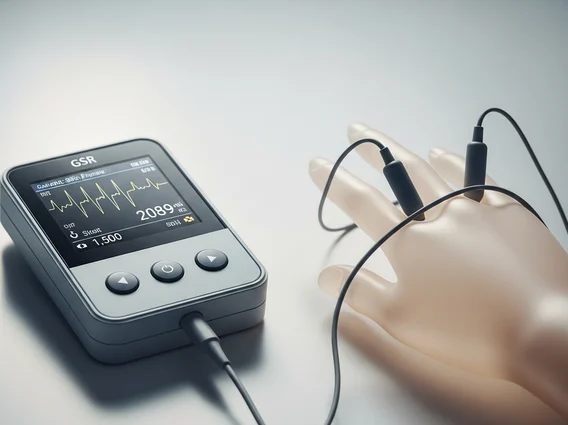
The galvanic skin response measurement typically involves placing two electrodes on the skin, most commonly on the palmar surface of the fingers or the palm of the hand. A small, imperceptible voltage is applied across these electrodes, and the resulting current flow is measured. The device then calculates the skin’s conductance, usually expressed in microsiemens (µS). Modern GSR devices are highly sensitive, capable of detecting minute changes in skin conductance, and often integrate with other physiological monitoring systems to provide a comprehensive view of an individual’s psychophysiological state. The process is entirely non-invasive and painless, making it a comfortable experience for the subject.
Applications of Galvanic Skin Response
The versatility of GSR makes it valuable across various fields, offering insights into human emotional and cognitive processes. The galvanic skin response applications span from fundamental psychological research to practical clinical and technological uses. Its ability to objectively quantify arousal makes it a robust tool for studying responses to different stimuli.
- Psychological Research: GSR is extensively used to study emotional responses, stress, anxiety, attention, and cognitive load. Researchers can observe how skin conductance changes in response to various emotional stimuli, helping to understand the underlying mechanisms of human emotion.
- Biofeedback and Relaxation Training: Individuals can learn to regulate their physiological responses, including skin conductance, through biofeedback training. By observing their GSR levels in real-time, they can practice relaxation techniques to reduce stress and anxiety.
- Neurological Studies: GSR can be used to assess autonomic nervous system function in patients with neurological disorders, providing diagnostic and prognostic information.
- Lie Detection Research: While controversial and not admissible as sole evidence in legal contexts, GSR is one component of polygraph tests, as it can indicate physiological arousal associated with deception.
- Human-Computer Interaction (HCI): In HCI, GSR helps evaluate user engagement, frustration, or cognitive load when interacting with technology, informing the design of more intuitive and user-friendly interfaces.
These applications highlight GSR’s role as a powerful tool for understanding the intricate relationship between the mind and body, providing objective data that complements self-report measures and behavioral observations.