Fibroadenoma
Fibroadenoma is a common, benign breast lump that often affects women during their reproductive years. Understanding this condition is crucial for proper management and to alleviate concerns about breast health.
Key Takeaways
- Fibroadenoma are non-cancerous breast lumps, distinct from malignant tumors.
- They are typically firm, rubbery, movable, and painless, varying in size.
- Diagnosis involves clinical examination, imaging (ultrasound, mammogram), and often a biopsy.
- Most fibroadenomas do not require treatment but may be monitored; surgical removal is an option for larger or symptomatic ones.
- While generally benign, some complex fibroadenomas may slightly increase breast cancer risk, necessitating careful follow-up.
What is Fibroadenoma of the Breast?
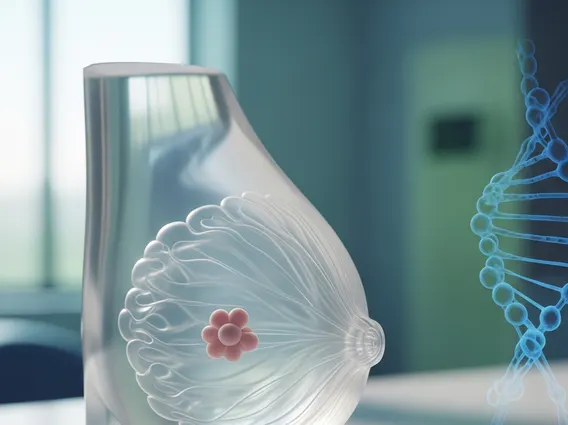
Fibroadenoma refers to a common, non-cancerous (benign) tumor of the breast. It is composed of both glandular and stromal (connective) tissue, giving it a distinct rubbery or firm texture. These lumps are often described as feeling like a marble within the breast, easily movable under the skin. They are one of the most frequent types of benign breast masses, particularly prevalent in women between the ages of 15 and 35, though they can occur at any age.
A fibroadenoma of the breast typically presents as a solitary lump, but it is possible to have multiple fibroadenomas in one or both breasts. While most are small, ranging from 1 to 3 centimeters, they can sometimes grow larger, especially during pregnancy or hormone therapy. The exact cause is not fully understood, but it is believed that reproductive hormones, particularly estrogen, play a significant role in their development and growth.
Fibroadenoma Symptoms, Causes, and Diagnosis
Understanding fibroadenoma symptoms, causes, and diagnosis is essential for early identification and appropriate management. The most common symptom is the discovery of a distinct breast lump.
Common characteristics of a fibroadenoma lump include:
- Firm or rubbery texture
- Smooth, well-defined borders
- Easily movable under the skin
- Painless to the touch
While the precise fibroadenoma causes are not definitively known, hormonal influences are strongly implicated. Fibroadenomas often grow in response to estrogen, which explains why they are common in reproductive-aged women and may increase in size during pregnancy or while using hormonal contraception, and often shrink after menopause. There is no clear link to specific lifestyle factors or dietary habits.
The fibroadenoma diagnosis typically involves a combination of methods. Initially, a clinical breast exam is performed by a healthcare provider to assess the lump’s characteristics. This is usually followed by imaging tests such as ultrasound, often the first choice for younger women, and mammogram, used for older women or when ultrasound findings are inconclusive. MRI may be used in complex cases or for high-risk individuals.
To confirm the diagnosis and rule out malignancy, a biopsy is frequently performed. This involves taking a small tissue sample from the lump for microscopic examination. The two main types are fine-needle aspiration (FNA) or core needle biopsy, with core needle biopsy being more common for fibroadenomas due to its ability to retrieve more tissue.
Is Fibroadenoma a Type of Cancer? Treatment and Outlook
A primary concern for many women is whether is fibroadenoma a type of cancer. It is crucial to understand that fibroadenomas are benign tumors and are not cancerous. They do not spread to other parts of the body and, in most cases, do not increase the risk of breast cancer. However, there are rare instances of complex fibroadenomas or fibroadenomas coexisting with other proliferative breast conditions that might slightly elevate the risk, making regular follow-up important.
For most fibroadenomas, especially those that are small, stable, and confirmed as benign by biopsy, no active fibroadenoma treatment options are necessary. Many women opt for watchful waiting, where the lump is monitored with regular clinical exams and imaging to check for changes in size or characteristics.
Treatment options, when needed, include surgical excision, where the lump is surgically removed, typically recommended if the fibroadenoma is large, growing rapidly, causing pain, or if there is diagnostic uncertainty. Another option for smaller fibroadenomas is cryoablation, a minimally invasive procedure where a thin probe is inserted into the fibroadenoma to freeze and destroy the tissue.
The fibroadenoma outlook is generally excellent. Most fibroadenomas remain stable or shrink over time, and a significant number may even resolve spontaneously. Even after removal, new fibroadenomas can develop in the same or opposite breast, highlighting the importance of continued breast self-awareness and routine medical check-ups. Regular screening, as recommended by healthcare professionals, remains vital for overall breast health.