Ethmoid Sinus
The ethmoid sinus is one of the four pairs of paranasal sinuses, playing a crucial role in the respiratory system. Located between the eyes, these complex air-filled cavities contribute to various physiological functions, including humidifying inhaled air and reducing the weight of the skull.
Key Takeaways
- The Ethmoid Sinus is a complex group of air cells located between the eyes, contributing to air humidification and skull weight reduction.
- Its intricate anatomy involves multiple small cavities, making it prone to inflammation and infection.
- Common issues include sinusitis, which can cause symptoms like facial pain, nasal discharge, and pressure.
- Proper understanding of its structure and function is vital for diagnosing and treating related conditions.
What Is the Ethmoid Sinus and Its Function?
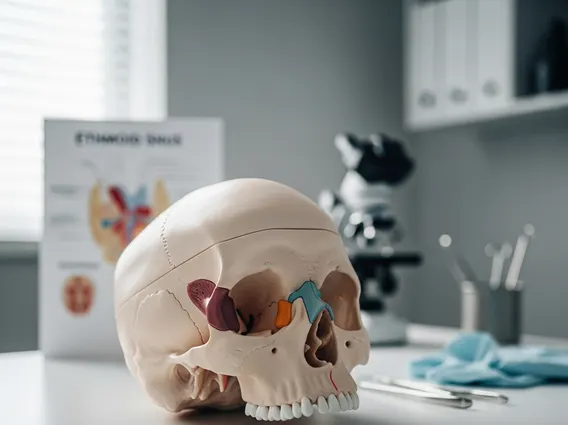
The Ethmoid Sinus refers to a collection of small, air-filled cavities located within the ethmoid bone, situated between the eyes and behind the bridge of the nose. Unlike the other paranasal sinuses (maxillary, frontal, and sphenoid), the ethmoid sinuses are not a single large cavity but rather a labyrinth of 3 to 18 individual air cells, divided into anterior, middle, and posterior groups. These cells are lined with a mucous membrane that produces mucus, which helps to trap inhaled particles and pathogens.
The primary functions of the ethmoid sinuses are multifaceted. They contribute to the humidification and warming of inhaled air before it reaches the lungs, protecting the delicate respiratory tissues. Additionally, these air-filled spaces help to lighten the weight of the skull, making it easier for the head to be supported. They also play a role in voice resonance and provide a protective barrier for the brain and eyes against trauma. Understanding the ethmoid sinus involves recognizing its critical role in both respiratory health and structural support.
Ethmoid Sinus Anatomy and Location
The ethmoid sinus anatomy and location explained reveals a sophisticated network of air cells embedded within the ethmoid bone, a light, spongy bone at the base of the skull. These sinuses are uniquely positioned deep within the facial structure, specifically between the orbits (eye sockets) and superior to the nasal cavity. They drain into the nasal cavity via small openings called ostia. The anterior and middle ethmoid cells typically drain into the middle meatus of the nasal cavity, while the posterior ethmoid cells drain into the superior meatus.
The delicate structure of the ethmoid sinuses, with their thin bony walls, places them in close proximity to vital structures such as the optic nerves and the brain. This anatomical closeness is significant because infections or inflammation within these sinuses can potentially spread to these adjacent areas, leading to more serious complications. The ethmoid bone itself forms part of the medial wall of the orbit and the roof of the nasal cavity, highlighting the central position of these sinuses in facial and cranial anatomy.
Common Ethmoid Sinus Problems and Symptoms
Common ethmoid sinus problems and symptoms often arise from inflammation or infection, a condition known as sinusitis. Due to their complex, multi-celled structure and narrow drainage pathways, the ethmoid sinuses are particularly susceptible to blockages and subsequent infection. When these drainage pathways become obstructed, mucus can accumulate, creating an ideal environment for bacterial or viral growth.
Symptoms associated with ethmoid sinusitis can vary but commonly include:
- Pain and pressure between the eyes or on the bridge of the nose.
- Headache, often localized to the forehead or behind the eyes.
- Nasal congestion and discharge, which may be thick and discolored.
- Reduced sense of smell (hyposmia) or complete loss of smell (anosmia).
- Fatigue and general malaise.
- Postnasal drip, leading to a sore throat or cough.
According to the Centers for Disease Control and Prevention (CDC), sinusitis affects millions of adults annually in the United States, with ethmoid involvement being a frequent component of chronic or recurrent sinus infections. Complications, though rare, can include orbital cellulitis (infection spreading to the eye socket) or, in severe cases, intracranial complications due to the proximity to the brain. Early diagnosis and treatment are crucial to prevent such serious outcomes.