Cardiopulmonary Resuscitation
Cardiopulmonary Resuscitation (CPR) is a life-saving emergency procedure performed when the heart stops beating. Immediate CPR can significantly increase a person’s chance of survival following cardiac arrest.
Key Takeaways
- Cardiopulmonary Resuscitation (CPR) is an emergency procedure to maintain blood flow and oxygen to the brain and vital organs.
- It is crucial in situations of cardiac arrest, where the heart has stopped beating effectively.
- Performing CPR involves chest compressions and, if trained, rescue breaths.
- Early and effective CPR can double or triple a person’s chance of survival.
- Learning CPR empowers bystanders to act quickly in life-threatening emergencies.
What is Cardiopulmonary Resuscitation (CPR)?
What is Cardiopulmonary Resuscitation (CPR)? It is an emergency procedure that combines chest compressions with artificial ventilation in an effort to manually preserve intact brain function until further measures are taken to restore spontaneous blood circulation and breathing in a person who is in cardiac arrest. When someone experiences cardiac arrest, their heart stops pumping blood, leading to a rapid loss of oxygen to the brain and other vital organs. Without immediate intervention, brain damage can occur within minutes, and death is likely.
The primary goal of cardiopulmonary resuscitation is to circulate oxygen-rich blood to the brain and heart until professional medical help arrives. This critical intervention can bridge the gap between collapse and advanced medical care, providing a vital lifeline. According to the American Heart Association (AHA), immediate CPR can double or triple a person’s chance of survival after cardiac arrest, underscoring its profound importance.
Performing CPR: A Step-by-Step Guide
Knowing how to perform cardiopulmonary resuscitation can make a critical difference in an emergency. For untrained bystanders, hands-only CPR is recommended, focusing solely on chest compressions. Here are the general steps for cardiopulmonary resuscitation:
- Check the Scene and the Person: Ensure the environment is safe. Tap the person’s shoulder and shout to see if they respond. If they are unresponsive and not breathing or only gasping, call for emergency medical services (e.g., 911 in the U.S.) immediately.
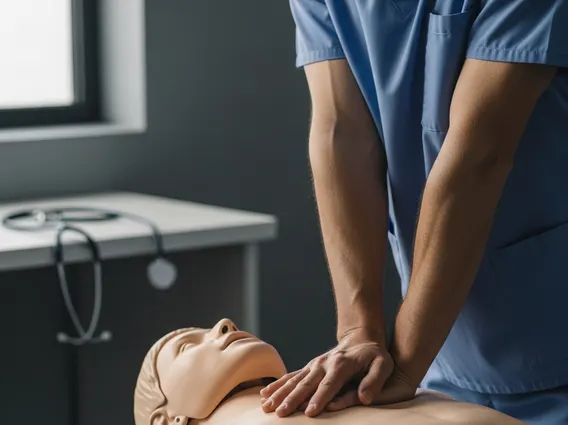
- Position Your Hands: Kneel beside the person. Place the heel of one hand in the center of their chest, on the lower half of the breastbone. Place your other hand on top of the first, interlocking your fingers.
- Begin Chest Compressions: Keep your arms straight and position your shoulders directly over your hands. Push hard and fast, compressing the chest at least 2 inches (5 cm) deep for adults, at a rate of 100 to 120 compressions per minute. This rhythm is similar to the beat of the song “Stayin’ Alive.”
- Continue Until Help Arrives: Continue chest compressions without interruption until emergency medical personnel take over or the person shows signs of life, such as breathing.
If you are trained in CPR and comfortable providing rescue breaths, the standard ratio is 30 compressions followed by 2 breaths. However, for most bystanders, continuous, high-quality chest compressions are the most crucial aspect.
Benefits of Cardiopulmonary Resuscitation
The cardiopulmonary resuscitation benefits are substantial and far-reaching, primarily centered on improving outcomes for individuals experiencing cardiac arrest. The most significant benefit is the increased likelihood of survival. Without CPR, the chances of survival from out-of-hospital cardiac arrest diminish rapidly with each passing minute. By maintaining blood flow to the brain, CPR helps prevent irreversible brain damage, which can occur within minutes of the heart stopping.
Early CPR also buys precious time for emergency medical services to arrive and administer advanced life support, such as defibrillation. According to the Centers for Disease Control and Prevention (CDC), about 90% of people who have an out-of-hospital cardiac arrest die, but CPR, especially if performed immediately, can double or triple a person’s chance of survival. Furthermore, widespread CPR training empowers communities, turning bystanders into potential lifesavers and fostering a sense of preparedness for medical emergencies.