Bone Tissue
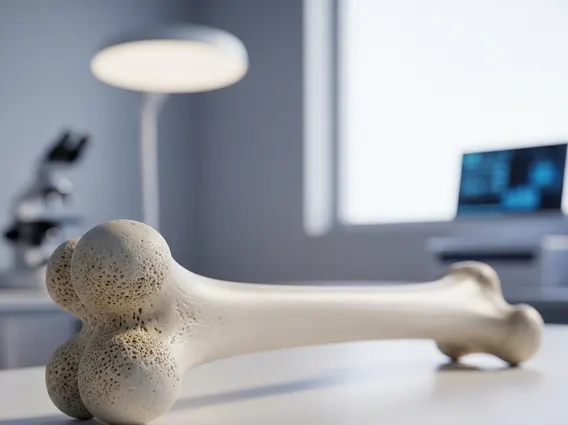
Bone tissue is a remarkable and dynamic living tissue that forms the rigid framework of the body. It plays a crucial role in providing structural support, protecting vital organs, and facilitating movement.
Key Takeaways
- Bone tissue provides essential structural support, organ protection, and mineral storage for the body.
- It is composed of specialized cells like osteoblasts, osteocytes, and osteoclasts, embedded within a mineralized extracellular matrix.
- The two primary types of bone tissue and their functions are compact (dense, strong outer layer) and spongy (lighter, internal, houses bone marrow).
- Bone healing is a complex, multi-stage process involving inflammation, callus formation, and extensive remodeling to restore strength and form.
What is Bone Tissue?
At its core, what is bone tissue defines a specialized connective tissue that is both strong and flexible, yet incredibly resistant to compression. Beyond its role as the body’s scaffolding, bone tissue serves several vital functions. It acts as a reservoir for essential minerals, particularly calcium and phosphate, which are crucial for various physiological processes. Furthermore, the internal cavities of certain bones house bone marrow, where hematopoiesis—the production of blood cells—occurs. This constant activity highlights bone tissue as a living, dynamic entity, continuously being broken down and rebuilt in a process known as remodeling.
Structure, Composition, and Types of Bone Tissue
Understanding the intricate bone tissue structure and composition reveals how it achieves its remarkable strength and adaptability. This complex tissue is a sophisticated blend of cellular components and a robust extracellular matrix, organized into distinct types.
Cellular and Extracellular Components
The cellular components are integral to bone maintenance and repair. Osteoblasts are the bone-forming cells responsible for synthesizing and secreting the organic matrix, which then becomes mineralized. Once osteoblasts become trapped within the matrix they have produced, they mature into osteocytes, the primary cells of mature bone, which maintain the bone tissue and communicate with other bone cells. Conversely, osteoclasts are large, multinucleated cells responsible for bone resorption, breaking down old or damaged bone tissue. The extracellular matrix itself consists of an organic component, primarily collagen fibers, which provide flexibility and tensile strength, and an inorganic component, mainly hydroxyapatite crystals (a form of calcium phosphate), which gives bone its hardness and rigidity. This unique composition allows bone to withstand significant stress while remaining somewhat resilient.
Compact and Spongy Bone
The body contains two main types of bone tissue and their functions, each adapted for specific roles. Compact bone, also known as cortical bone, is dense and forms the outer layer of all bones, as well as the shafts of long bones. Its primary function is to provide strength, protection, and support, resisting bending and twisting forces. Compact bone is organized into microscopic units called osteons, or Haversian systems, which are cylindrical structures containing concentric layers of bone matrix around a central canal housing blood vessels and nerves. In contrast, spongy bone, or cancellous bone, is found in the interior of bones, particularly at the ends of long bones and within flat bones. It is characterized by a lattice-like network of bony struts called trabeculae, which are oriented along lines of stress to provide strength without excessive weight. The spaces within spongy bone are filled with red bone marrow, crucial for blood cell production, making it lighter and more metabolically active than compact bone.
Bone Tissue Healing Process
The ability of bone to repair itself after injury is a testament to its dynamic nature. Understanding how does bone tissue heal involves a well-orchestrated sequence of biological events that restore the bone’s integrity and function. This process typically unfolds in several overlapping stages.
Initially, immediately after a fracture, blood vessels within the bone and surrounding tissues rupture, leading to the formation of a hematoma, a blood clot that seals the fracture site. This hematoma provides a framework for the subsequent healing stages. Over the next few days, inflammatory cells clear debris, and a soft callus begins to form. Fibroblasts produce collagen fibers, and chondroblasts generate cartilage, creating a fibrocartilaginous callus that bridges the broken bone ends. This soft callus is then gradually replaced by a hard callus. Osteoblasts migrate into the area and begin to produce new bone tissue, converting the fibrocartilaginous callus into a bony callus composed of woven bone. This stage provides initial mechanical stability to the fracture. Finally, the longest phase, bone remodeling, begins. Over months or even years, osteoclasts resorb excess bone material, while osteoblasts lay down new lamellar bone, gradually reshaping the bone to its original form and strength, aligning with the mechanical stresses placed upon it. Factors such as age, nutrition, blood supply, and the stability of the fracture site significantly influence the efficiency and speed of this healing process.