
Autoclave
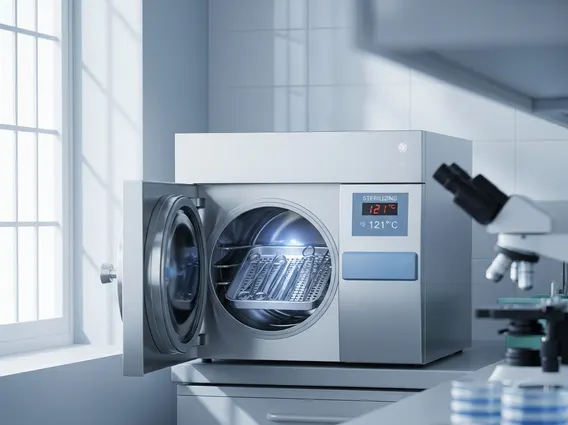
An autoclave is a critical piece of equipment used across various industries to achieve sterilization. It employs high-pressure saturated steam to eliminate microorganisms, including bacteria, viruses, fungi, and spores, from instruments and materials.
Key Takeaways
- An autoclave is a device that uses high-pressure steam to sterilize equipment and materials.
- Its primary purpose is to ensure the complete elimination of all microbial life, including resistant spores.
- Autoclaves achieve sterilization by exposing items to specific temperatures and pressures for a defined duration.
- They are indispensable in healthcare, laboratories, and manufacturing for preventing contamination and infection.
- Various types of autoclaves exist, each suited for different applications and volumes of materials.
What is an Autoclave and Its Purpose?
Autoclaves are fundamental to maintaining sterile environments, particularly in settings where preventing contamination is paramount. Their ability to deliver thorough sterilization makes them indispensable for public health and safety.
Autoclave Definition
So, what is an Autoclave? An autoclave is essentially a robust pressure chamber designed to subject instruments and materials to high-pressure saturated steam at elevated temperatures. This process effectively kills all forms of microbial life, including highly resistant bacterial endospores. The core of the autoclave definition and purpose lies in its capacity to achieve sterility, which is the complete absence of viable microorganisms.
Primary Uses and Importance
The question of what is an autoclave used for spans numerous fields. In healthcare, autoclaves sterilize surgical instruments, medical waste, and laboratory equipment, significantly reducing the risk of healthcare-associated infections. Laboratories use them for sterilizing media, glassware, and biohazardous waste. Beyond medical and scientific applications, autoclaves are also utilized in various industrial processes, such as vulcanizing rubber or curing composites, where controlled high-temperature and pressure environments are required.
How Autoclaves Achieve Sterilization
The effectiveness of an autoclave hinges on a precise combination of heat, pressure, and time. Understanding this mechanism is crucial to appreciating its role in infection control and scientific research.
The Sterilization Process
To understand how does an autoclave work, one must consider the principles of moist heat sterilization. Autoclaves operate by introducing steam into a sealed chamber, which is then pressurized. This pressure allows the steam to reach temperatures far exceeding the boiling point of water at atmospheric pressure (typically 121°C or 134°C). The moist heat from the steam denatures proteins and melts lipids in microorganisms, leading to their irreversible destruction. The duration of exposure to these conditions is critical and varies depending on the load and type of material being sterilized.
Key Components for Operation
An autoclave typically consists of a robust pressure vessel, a sealing door, a heating element to generate steam, and a control system to monitor and regulate temperature, pressure, and cycle time. Safety features, such as pressure relief valves and interlocks, are also integral to prevent accidents. Modern autoclaves often include vacuum systems to remove air pockets, ensuring better steam penetration and more effective sterilization.
Types of Autoclaves and Their Applications
Autoclaves come in various designs and sizes, each tailored to specific needs and operational scales. Selecting the appropriate type is crucial for efficient and effective sterilization.
Common Autoclave Varieties
When considering types of autoclaves and their uses, several common varieties stand out. Gravity displacement autoclaves are the simplest, relying on steam to displace air downwards through a drain port. They are suitable for sterilizing liquids and glassware. Pre-vacuum autoclaves, also known as Class B autoclaves, use a vacuum pump to remove air from the chamber before steam is introduced, ensuring superior steam penetration for porous loads and wrapped instruments. Tabletop autoclaves are smaller units commonly found in dental offices and clinics, designed for sterilizing a limited number of instruments.
Industry-Specific Uses
The application of autoclaves is highly diversified. In hospitals and surgical centers, large capacity autoclaves sterilize surgical kits and linens. Pharmaceutical companies use them for sterilizing drug components and equipment. Research laboratories rely on autoclaves for sterilizing culture media, reagents, and biological waste. Even tattoo and piercing studios utilize compact autoclaves to ensure the safety of their tools, highlighting their universal importance in preventing the spread of infections across various professional settings.



















