Abdominal Wall
The abdominal wall is a complex anatomical structure that forms the boundaries of the abdominal cavity, protecting vital organs and facilitating various bodily functions. Understanding its composition and role is crucial for comprehending abdominal health.
Key Takeaways
- The abdominal wall is a multi-layered structure of skin, fascia, and muscles that encloses the abdominal cavity.
- Its primary functions include protecting internal organs, maintaining abdominal pressure, facilitating movement, and aiding in respiration.
- Key anatomical components include the rectus abdominis, obliques, and transversus abdominis muscles.
- Common conditions affecting the abdominal wall range from hernias and muscle strains to nerve entrapment and various sources of pain.
- Abdominal wall pain can arise from muscular issues, nerve compression, or referred pain from internal organs.
What is the Abdominal Wall?
The **Abdominal Wall** refers to the muscular and fascial layers that form the anterior, lateral, and posterior boundaries of the abdominal cavity. This robust structure acts as a protective shield for the delicate internal organs, such as the intestines, liver, and kidneys, while also providing structural support for the torso. It is a dynamic region, capable of significant expansion and contraction, which is essential for activities like breathing, digestion, and movement.
Composed of several layers, the abdominal wall extends from the lower ribs and sternum down to the pelvis. Its integrity is vital for maintaining intra-abdominal pressure, which is critical for functions like coughing, sneezing, defecation, and childbirth. A comprehensive understanding of the **abdominal wall anatomy** reveals a sophisticated arrangement of tissues designed for both strength and flexibility.
Abdominal Wall Anatomy and Its Functions
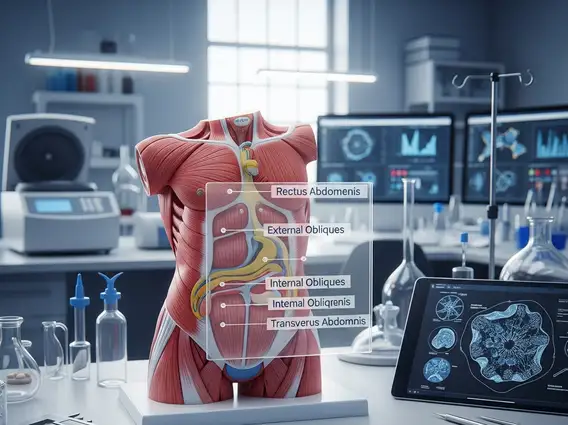
The **abdominal wall anatomy** is intricate, consisting of several distinct layers that work synergistically. From superficial to deep, these layers typically include the skin, subcutaneous fat, superficial fascia, and several layers of muscle and deep fascia. The primary muscles of the anterior and lateral abdominal wall are:
- Rectus Abdominis: Often called the “six-pack” muscle, it runs vertically from the sternum to the pubic bone, primarily responsible for flexing the trunk.
- External Oblique: The outermost of the flat abdominal muscles, its fibers run inferomedially, contributing to trunk rotation and lateral flexion.
- Internal Oblique: Lying beneath the external oblique, its fibers run superomedially, also involved in trunk rotation and lateral flexion.
- Transversus Abdominis: The deepest abdominal muscle, its fibers run horizontally, playing a crucial role in compressing the abdominal contents and stabilizing the core.
The collective **function of abdominal wall** muscles extends beyond mere protection. These muscles are essential for posture, providing stability to the spine and pelvis. They generate intra-abdominal pressure, which aids in forced expiration, coughing, vomiting, and expelling feces and urine. Furthermore, they facilitate trunk movements such as bending forward, backward, and sideways, as well as twisting. The strength and coordination of these muscles are fundamental to overall physical health and mobility.
Common Abdominal Wall Conditions and Pain
Various conditions can affect the abdominal wall, leading to discomfort or significant health issues. **Abdominal wall conditions explained** often include hernias, muscle strains, nerve entrapment, and tumors. Hernias, for instance, occur when an organ or fatty tissue pushes through a weak spot in the abdominal wall, creating a bulge. Common types include inguinal, umbilical, and incisional hernias, which can cause pain, discomfort, and potentially lead to complications if left untreated. Muscle strains or tears can result from overexertion, trauma, or sudden movements, leading to localized pain and tenderness.
Understanding the **causes of abdominal wall pain** is crucial for accurate diagnosis and effective treatment. Pain can originate directly from the muscles, fascia, or nerves within the abdominal wall. Muscular pain often presents as a sharp, localized ache that worsens with movement or palpation. Nerve entrapment, such as anterior cutaneous nerve entrapment syndrome (ACNES), occurs when nerves passing through the abdominal wall become compressed or irritated, leading to chronic, localized pain that can be sharp or burning. Less commonly, pain may be referred from internal organs, mimicking abdominal wall pain, or be a symptom of more serious underlying conditions like abdominal wall tumors or infections. A thorough medical evaluation is essential to differentiate between these various sources of discomfort.