HER2 Negative
HER2 Negative refers to a status in cancer diagnosis, particularly relevant in breast cancer, indicating the absence of overexpression of the human epidermal growth factor receptor 2 protein on cancer cells. This diagnostic finding guides treatment strategies and influences prognosis.
Key Takeaways
- HER2 Negative status means cancer cells do not overproduce the HER2 protein, which is a key driver of cell growth.
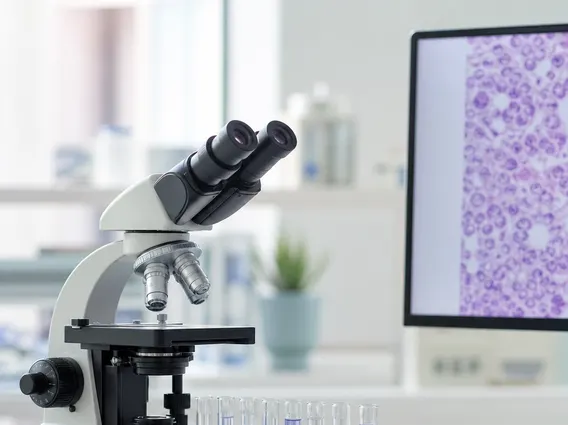
- This status is determined through diagnostic tests on tumor tissue, such as immunohistochemistry (IHC) and fluorescence in situ hybridization (FISH).
- HER2 Negative cancers, including a significant portion of breast cancers, require different treatment approaches compared to HER2-positive cancers.
- Prognosis for HER2 Negative cancer varies widely depending on the specific cancer type, stage, and other biological factors.
- Treatment typically involves chemotherapy, hormone therapy (if hormone receptor-positive), surgery, and radiation, but not HER2-targeted therapies.
What is HER2 Negative?
HER2 Negative is a clinical classification for certain types of cancer, most notably breast cancer, where the cancer cells do not overexpress the human epidermal growth factor receptor 2 (HER2) protein. The HER2 protein is a receptor on the surface of cells that plays a crucial role in cell growth, division, and repair. In some cancers, an overabundance of this protein can lead to aggressive tumor growth and spread.
When a tumor is classified as HER2 Negative, it means that diagnostic tests have shown the cancer cells have normal levels of the HER2 protein. This is distinct from HER2-positive cancers, which have an amplified HER2 gene or overexpression of the protein. The determination of HER2 status is vital because it dictates whether a patient will benefit from HER2-targeted therapies, which are highly effective against HER2-positive tumors.
For instance, her2 negative breast cancer explained involves understanding that these tumors do not respond to drugs like trastuzumab (Herceptin) or pertuzumab (Perjeta), which specifically target the HER2 protein. Approximately 70-80% of breast cancers are HER2 Negative. The status is typically assessed using immunohistochemistry (IHC) to measure the amount of HER2 protein on the cell surface, and sometimes fluorescence in situ hybridization (FISH) to check for HER2 gene amplification if IHC results are ambiguous. According to the American Cancer Society, this testing is a standard part of breast cancer diagnosis (Source: American Cancer Society).
Prognosis and Treatment for HER2 Negative Cancer
The her2 negative meaning and prognosis can vary significantly depending on the specific type of cancer and other biological factors. For HER2 Negative breast cancer, the prognosis is often influenced by its hormone receptor status. For example, cancers that are both HER2 Negative and hormone receptor-negative are known as triple-negative breast cancers (TNBC), which are often more aggressive and have fewer targeted treatment options. However, HER2 Negative cancers that are hormone receptor-positive may respond well to hormone therapy.
Treatment for HER2 Negative cancer focuses on strategies that do not involve HER2-targeted therapies. The primary approaches often include:
- Surgery: To remove the tumor, which may involve lumpectomy or mastectomy for breast cancer.
- Radiation Therapy: Often used after surgery to destroy any remaining cancer cells and reduce the risk of recurrence.
- Chemotherapy: Systemic treatment that uses drugs to kill cancer cells throughout the body. This is a cornerstone for many HER2 Negative cancers, especially those that are aggressive or have spread.
- Hormone Therapy: For HER2 Negative cancers that are also hormone receptor-positive (e.g., estrogen receptor-positive or progesterone receptor-positive), medications that block hormones or reduce hormone levels can be highly effective.
For triple-negative breast cancer, which is a subset of HER2 Negative cancers, chemotherapy is typically the main systemic treatment. Recent advancements have also introduced immunotherapy and PARP inhibitors for specific subsets of TNBC, offering new avenues for improving outcomes. The choice of treatment plan is highly individualized, considering the cancer’s stage, grade, patient’s overall health, and other specific tumor characteristics.