Mra
The acronym MRA represents distinct concepts across different fields, primarily in medical diagnostics and social advocacy. Understanding its context is crucial for accurate interpretation, whether referring to advanced imaging techniques or a social movement.
Key Takeaways
- Magnetic Resonance Angiography (MRA) is a non-invasive medical imaging technique used to visualize blood vessels.
- MRA scans utilize strong magnetic fields and radio waves to produce detailed images of arteries and veins, aiding in the diagnosis of vascular conditions.
- The MRA procedure typically involves lying on a table that slides into a scanner, often requiring contrast material for enhanced clarity.
- Men’s Rights Activism (MRA) is a social and political movement focused on addressing perceived disadvantages and discrimination faced by men.
- Despite sharing an acronym, these two concepts are entirely unrelated in their meaning and application.
What is Magnetic Resonance Angiography (MRA)?
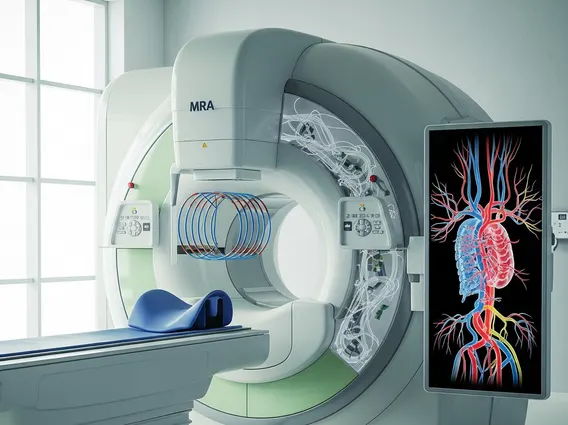
Magnetic Resonance Angiography (MRA) is a specialized type of magnetic resonance imaging (MRI) that provides detailed images of blood vessels throughout the body. This non-invasive diagnostic tool is crucial for detecting, diagnosing, and monitoring various vascular conditions. Unlike traditional angiography, MRA does not typically require the insertion of a catheter into the blood vessels, making it a safer option for many patients. The process relies on a powerful magnetic field and radio waves to generate cross-sectional images of the body, which are then processed by a computer to create detailed 3D representations of arteries and veins.
MRA medical imaging explained, helps clinicians identify blockages, aneurysms, dissections, and other abnormalities in blood vessels. It is frequently used to examine vessels in the brain, neck, heart, kidneys, and limbs. For instance, it can detect carotid artery disease, which is a risk factor for stroke, or renal artery stenosis, which can cause high blood pressure. The ability of MRA to visualize blood flow without ionizing radiation makes it a valuable tool in modern medicine, particularly for patients who may be sensitive to X-ray exposure or iodine-based contrast agents.
MRA Scan Procedure Details
The MRA scan procedure details typically begin with preparation instructions from the healthcare provider. Patients are usually advised to remove all metal objects, such as jewelry, watches, and hearing aids, as these can interfere with the magnetic field. It is also important to inform the technologist about any implanted medical devices, like pacemakers, cochlear implants, or certain types of metallic clips, as these may be contraindications for an MRA or require special precautions. In some cases, a contrast agent, often gadolinium-based, may be injected intravenously to enhance the visibility of blood vessels. This contrast material helps highlight specific areas and improve the clarity of the images.
During the MRA scan, the patient lies on a movable table that slides into a large, tunnel-shaped scanner. The machine generates a strong magnetic field and emits radio waves, which are harmless. Patients are instructed to remain still throughout the procedure, which can last from 30 to 90 minutes, depending on the area being examined. The scanner produces loud knocking or buzzing noises, so earplugs or headphones are often provided. After the scan, if a contrast agent was used, patients may be advised to drink plenty of fluids to help flush it from their system. The images are then interpreted by a radiologist, who sends a report to the referring physician.
Key steps involved in an MRA scan include:
- Preparation: Removing metallic items, informing staff of implants, and potentially fasting or receiving a contrast agent.
- Positioning: Lying still on a cushioned table that moves into the MRI scanner.
- Scanning: The machine generates magnetic fields and radio waves, producing images while making loud noises.
- Post-Scan: Reviewing images by a radiologist and, if contrast was used, ensuring adequate hydration.
MRA: Men’s Rights Activism Meaning
Beyond its medical application, MRA also stands for Men’s Rights Activism. This is a social and political movement that advocates for the rights and interests of men, often highlighting perceived systemic disadvantages or discrimination faced by men in various societal contexts. The movement addresses a range of issues, including but not limited to, disparities in family law (such as child custody and divorce proceedings), educational outcomes, workplace discrimination, and health concerns specific to men. Proponents of Men’s Rights Activism meaning often argue that societal structures and policies disproportionately favor women or overlook the unique challenges men encounter.
The movement operates through various channels, including online forums, advocacy groups, and public awareness campaigns, aiming to influence public opinion and policy. While the medical MRA focuses on diagnostic imaging, Men’s Rights Activism represents a distinct social discourse, emphasizing gender equality from a male perspective. It is important to differentiate between these two meanings of the acronym to avoid confusion, as their contexts and objectives are entirely separate.