Modified Radical Mastectomy
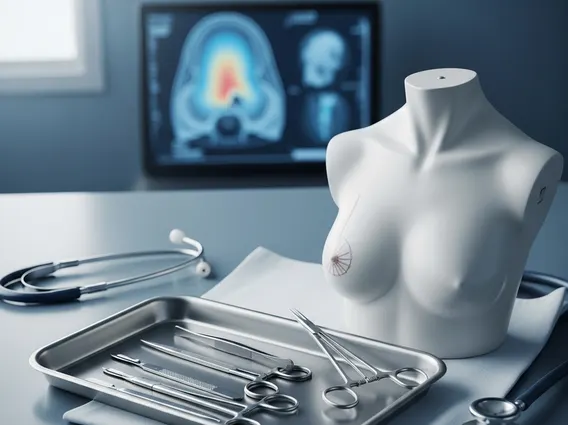
Modified Radical Mastectomy is a surgical procedure primarily used to treat breast cancer. It involves the removal of the entire breast along with specific lymph nodes, aiming to eliminate cancerous tissue and prevent its spread.
Key Takeaways
- Modified Radical Mastectomy involves removing the entire breast, the lining over the chest muscles, and lymph nodes from the armpit.
- This procedure is a common treatment for breast cancer, especially when cancer has spread to the lymph nodes.
- It differs from a Simple Mastectomy by also removing axillary lymph nodes, which is crucial for staging and preventing further spread.
- Recovery after Modified Radical Mastectomy typically involves a hospital stay, pain management, and restrictions on arm movement to aid healing.
- Physical therapy and follow-up care are essential for regaining strength and managing potential long-term effects like lymphedema.
What is Modified Radical Mastectomy?
Modified Radical Mastectomy is a surgical procedure for breast cancer that involves the removal of the entire breast, including the skin, nipple, areola, and most of the underlying breast tissue. Crucially, it also includes the removal of the lining over the chest muscles (pectoralis major and minor) and a significant number of lymph nodes from the armpit (axillary lymph node dissection). This comprehensive approach is often recommended when breast cancer has spread to the lymph nodes or when the tumor is large, making breast conservation therapy unsuitable.
The primary goal of this surgery is to remove all visible cancer and reduce the risk of recurrence. While it is a major surgery, advancements in surgical techniques and post-operative care have significantly improved outcomes and quality of life for patients. According to the American Cancer Society, breast cancer remains a leading cancer diagnosis among women, and mastectomy procedures like this are vital treatment options for many.
Modified Radical Mastectomy Procedure and Comparison to Simple Mastectomy
The modified radical mastectomy procedure begins with the patient under general anesthesia. The surgeon makes an incision to remove the entire breast, including the skin, nipple, and areola. Unlike a traditional radical mastectomy, the underlying chest muscles (pectoralis major and minor) are preserved, which helps maintain chest wall integrity and function. Following breast removal, the surgeon proceeds with an axillary lymph node dissection, carefully removing several lymph nodes from the armpit. These lymph nodes are then sent for pathological examination to determine if cancer cells are present, which helps in cancer staging and guides further treatment decisions.
Understanding the differences between a modified radical mastectomy and other procedures is important. A key distinction lies in the extent of tissue removal, particularly concerning the lymph nodes. The following table highlights the main differences between a modified radical mastectomy and a simple mastectomy:
| Feature | Modified Radical Mastectomy | Simple Mastectomy (Total Mastectomy) |
|---|---|---|
| Breast Tissue Removal | Entire breast (skin, nipple, areola, underlying tissue) | Entire breast (skin, nipple, areola, underlying tissue) |
| Chest Muscles | Preserved (lining over muscles removed) | Preserved |
| Axillary Lymph Nodes | Removed (Axillary Lymph Node Dissection) | Not typically removed (unless sentinel node biopsy is positive) |
| Indications | Invasive cancer with lymph node involvement, large tumors | Non-invasive cancer (DCIS), prophylactic mastectomy, smaller invasive cancers without lymph node involvement |
The choice between modified radical mastectomy vs simple mastectomy depends on various factors, including the type and stage of breast cancer, tumor size, lymph node status, and the patient’s overall health and preferences.
Recovery After Modified Radical Mastectomy
Recovery after Modified Radical Mastectomy is a significant process that requires time and careful management. Patients typically stay in the hospital for one to two days post-surgery. During this time, pain is managed with medication, and drains are usually placed to collect fluid that accumulates in the surgical area. These drains are usually removed a week or two after surgery, once fluid output decreases.
Upon returning home, patients are advised to restrict heavy lifting and strenuous arm movements on the affected side for several weeks to allow the surgical site to heal. Physical therapy often begins soon after surgery to help restore range of motion in the arm and shoulder and prevent stiffness. Potential complications can include:
- Pain and discomfort at the surgical site
- Swelling (lymphedema) in the arm due to lymph node removal
- Numbness or altered sensation in the chest and arm
- Hematoma (collection of blood) or seroma (collection of fluid)
- Infection
Long-term follow-up care is crucial, involving regular check-ups with the oncology team to monitor for recurrence and manage any lasting side effects. Patients may also consider breast reconstruction options, either immediately or at a later stage, to restore breast contour.