
Mip Test
The Mip Test is a crucial diagnostic tool used in respiratory medicine to assess the strength of a patient’s breathing muscles. Understanding this test is vital for evaluating various neuromuscular and pulmonary conditions affecting respiratory function.
Key Takeaways
- The Mip Test measures the maximum inspiratory pressure, reflecting the strength of the diaphragm and other inspiratory muscles.
- It is primarily used to diagnose and monitor conditions that weaken respiratory muscles, such as neuromuscular diseases or prolonged mechanical ventilation.
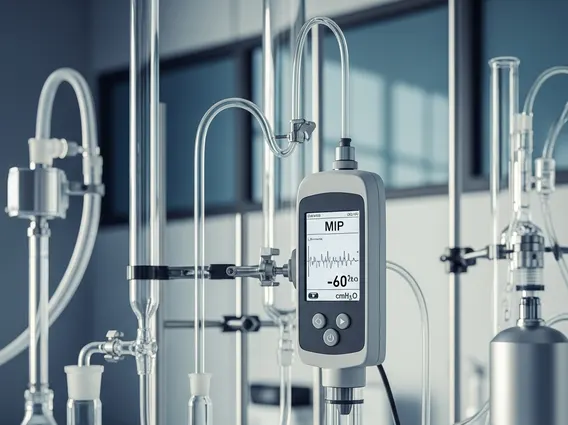
- The test involves the patient inhaling forcefully against an occluded mouthpiece, with the resulting pressure measured in centimeters of water (cmH2O).
- Results help clinicians assess respiratory muscle weakness, guide treatment decisions, and predict the need for ventilatory support.
What is Mip Test?
The Mip Test, also known as Maximum Inspiratory Pressure (MIP) or Negative Inspiratory Force (NIF), is a non-invasive pulmonary function test that quantifies the strength of a patient’s inspiratory muscles, primarily the diaphragm. This measurement is crucial for assessing the overall capacity of the respiratory system to generate negative pressure during inhalation. A low Mip Test value can indicate significant respiratory muscle weakness, which may compromise a patient’s ability to breathe effectively and clear secretions. The procedure for the Mip Test involves the patient making a maximal inspiratory effort against a closed or occluded airway, and the resulting negative pressure is recorded. This simple yet powerful diagnostic tool provides valuable insights into respiratory muscle function and is widely used in clinical settings. Therefore, the mip test explained helps clinicians understand the underlying physiological mechanisms affecting a patient’s breathing capacity.
Purpose of the Mip Test
The primary purpose of the Mip Test is to evaluate the integrity and strength of the inspiratory muscles, particularly in patients suspected of having respiratory muscle weakness. Clinicians utilize this test for several key reasons, including diagnosing neuromuscular disorders that affect breathing, assessing the readiness of patients for weaning from mechanical ventilation, and monitoring the progression of diseases that can impair respiratory function. For instance, in conditions like amyotrophic lateral sclerosis (ALS) or myasthenia gravis, the Mip Test can track the decline in muscle strength over time, helping to guide therapeutic interventions. It also serves as a prognostic indicator, as severely reduced MIP values are associated with an increased risk of respiratory failure. By providing an objective measure of inspiratory muscle strength, the Mip Test assists healthcare providers in making informed decisions regarding patient care and management strategies.
How the Mip Test Works
The procedure for understanding how the Mip Test works is straightforward and typically involves minimal patient discomfort. The patient is instructed to exhale completely to residual volume, then place a mouthpiece firmly in their mouth. The mouthpiece is connected to a pressure transducer, and the airway is briefly occluded. The patient is then asked to make a maximal inspiratory effort against this occluded airway for a short period, usually 15-20 seconds, or until a stable maximal pressure is achieved. The highest negative pressure generated during this effort is recorded as the Mip Test value, typically measured in centimeters of water (cmH2O). Multiple measurements are often taken to ensure reproducibility and accuracy.
Here are the general steps involved in performing a Mip Test:
- Patient Preparation: Ensure the patient understands the instructions and is in a comfortable, seated position.
- Mouthpiece Placement: The patient seals their lips tightly around the mouthpiece, which is connected to a pressure gauge.
- Forced Exhalation: The patient exhales as much air as possible to reach residual lung volume.
- Maximal Inspiration: The airway is occluded, and the patient is instructed to inhale as forcefully and quickly as possible.
- Measurement Recording: The peak negative pressure generated is recorded. This step is usually repeated several times to obtain consistent readings.
The Mip Test provides a direct assessment of the inspiratory muscle’s ability to generate force, offering critical data for clinical decision-making. Normal Mip Test values vary by age, sex, and body mass index, but generally, values below -60 cmH2O for men and -40 cmH2O for women are considered indicative of significant inspiratory muscle weakness. (Source: American Thoracic Society/European Respiratory Society Statement on Respiratory Muscle Testing, 2002).



















