Stage 0 Stomach Cancer Carcinoma In Situ
Stage 0 stomach cancer, also known as carcinoma in situ, represents the earliest and most localized form of gastric malignancy. Understanding this initial stage is crucial for timely diagnosis and effective intervention, offering the best prognosis for patients.
Key Takeaways
- Stage 0 stomach cancer, or carcinoma in situ, involves abnormal cells confined to the innermost lining of the stomach.
- It typically presents with no noticeable symptoms, making early detection challenging without screening.
- Diagnosis often occurs incidentally during endoscopy performed for other reasons.
- Treatment primarily involves endoscopic removal, offering a high cure rate due to the localized nature of the disease.
- Regular follow-up is essential to monitor for recurrence or progression.
What is Stage 0 Stomach Cancer Carcinoma In Situ?
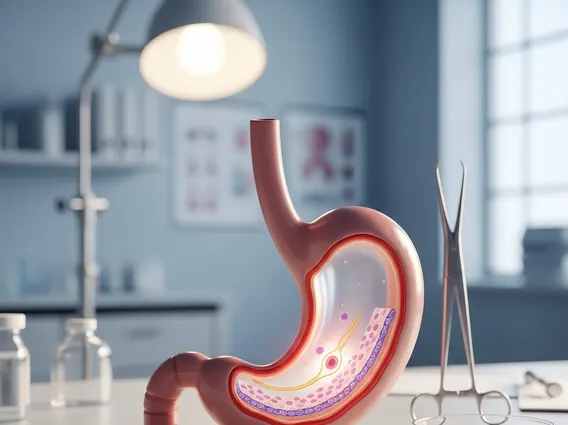
Stage 0 Stomach Cancer Carcinoma In Situ refers to the earliest form of gastric cancer where abnormal, cancerous cells are found only in the innermost layer of the stomach lining (the mucosa) and have not invaded deeper tissues. This condition is also known as carcinoma in situ stomach definition, highlighting that the cancer is “in its original place” and has not spread beyond the epithelial layer. Because these cells are confined to the superficial layer, they have not yet penetrated the basement membrane, which means they cannot spread to lymph nodes or distant sites. This non-invasive characteristic is what fundamentally distinguishes Stage 0 from more advanced stages of stomach cancer, where cells have breached these barriers.
The classification of Stage 0 is critical because it signifies a pre-invasive or non-invasive malignancy, offering the highest potential for complete cure. The World Health Organization (WHO) consistently emphasizes the importance of early detection across various cancer types for significantly improved patient outcomes. While specific global incidence rates for Stage 0 stomach cancer are challenging to quantify precisely due to its asymptomatic nature and often incidental diagnosis, its identification represents a crucial opportunity for intervention before the disease progresses into a more aggressive and harder-to-treat form.
Symptoms of Stage 0 Gastric Cancer
One of the most challenging aspects of diagnosing Stage 0 stomach cancer is the typical absence of noticeable symptoms. Patients with stage 0 gastric cancer symptoms usually do not experience any specific discomfort, pain, weight loss, nausea, or other common indicators often associated with more advanced stomach cancers. This lack of overt signs means that the condition is frequently discovered incidentally during diagnostic procedures performed for unrelated digestive issues, such as an endoscopy conducted for persistent heartburn, indigestion, or screening for other conditions.
Because there are no specific symptoms, early detection often relies on screening programs or investigations for other gastrointestinal complaints. Individuals considered to be at a higher risk for stomach cancer, such as those with a strong family history, certain genetic predispositions, or chronic conditions like atrophic gastritis or Helicobacter pylori infection, might benefit from regular endoscopic surveillance, especially in regions with high gastric cancer prevalence. For example, in countries like Japan and South Korea, where gastric cancer incidence is among the highest globally, widespread national screening programs utilizing endoscopy have proven highly effective in detecting early-stage cancers, including carcinoma in situ, thereby significantly improving overall survival rates.
Treatment Options for Stage 0 Stomach Carcinoma
The primary treatment for Stage 0 stomach carcinoma focuses on removing the localized cancerous cells while preserving as much healthy stomach tissue as possible. Given that the cancer is confined to the mucosa, surgical removal is often minimally invasive and highly effective. The main treatment modalities include:
- Endoscopic Mucosal Resection (EMR): This procedure involves using an endoscope to lift the cancerous tissue from the stomach wall and then resecting it. It’s suitable for smaller lesions.
- Endoscopic Submucosal Dissection (ESD): For larger or more complex lesions, ESD allows for the removal of a larger piece of tissue in one go, offering a higher chance of complete resection. This technique provides a more precise and deeper resection compared to EMR.
- Surgery (Gastrectomy): In rare cases where endoscopic removal is not feasible due to the size, location, or multifocal nature of the lesion, a partial gastrectomy (removal of part of the stomach) might be considered. However, this is less common for pure Stage 0 disease.
After treatment, regular follow-up endoscopies are crucial to monitor for any recurrence or new lesions. The prognosis for Stage 0 stomach cancer is excellent, with very high cure rates, often exceeding 90%, because the cancer has not spread beyond the initial layer.