Spine
The spine, also known as the vertebral column, is a crucial anatomical structure that forms the central support of the human body. It plays a vital role in movement, posture, and protecting the delicate spinal cord.
Key Takeaways
- The Spine is the central support structure of the body, protecting the spinal cord and enabling movement.
- It is composed of 33 individual vertebrae, intervertebral discs, and various ligaments and muscles.
- Key functions include providing structural support, facilitating flexibility, and safeguarding the nervous system.
- The spine is divided into cervical, thoracic, lumbar, sacral, and coccygeal regions.
- Common conditions like herniated discs, sciatica, and scoliosis can affect spinal health.
What is the Spine?
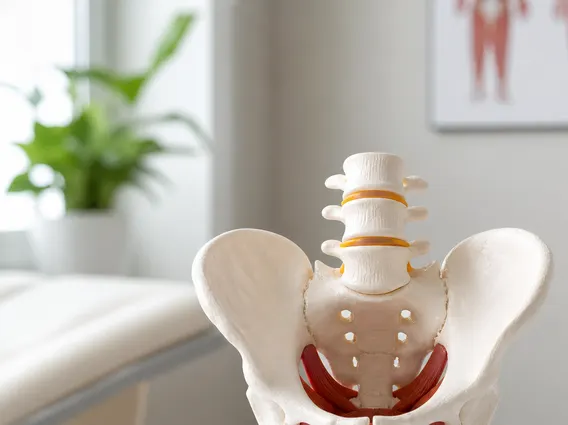
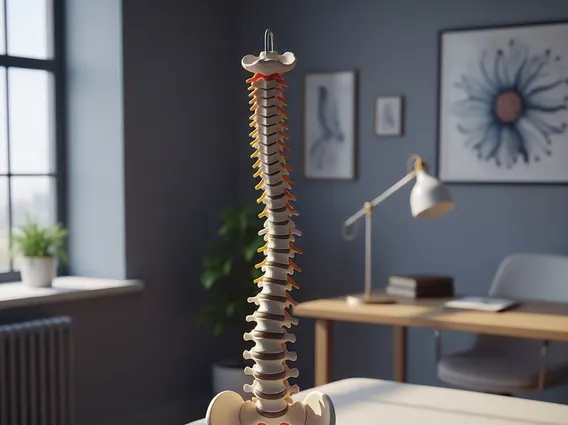
The Spine is a complex and vital structure extending from the base of the skull to the pelvis. It is the primary support system for the upper body, bearing weight and distributing forces. This crucial anatomical feature is composed of a series of 33 individual bones called vertebrae, stacked one upon another. These vertebrae are separated by intervertebral discs, which act as shock absorbers and allow for flexibility. Beyond the bones and discs, the spine also encompasses the spinal cord, a bundle of nerves that transmits signals between the brain and the rest of the body, along with numerous ligaments, tendons, and muscles that provide stability and enable movement.
This intricate arrangement allows the spine to perform its dual role of robust support and flexible movement, while also encasing and protecting the spinal cord from injury. Its natural curvature is designed to absorb stress and maintain balance, making it an engineering marvel within the human body.
Human Spine Anatomy and Functions
The human spine anatomy is remarkably intricate, comprising five distinct regions, each with specific characteristics and functions. These regions are the cervical (neck, 7 vertebrae), thoracic (upper back, 12 vertebrae), lumbar (lower back, 5 vertebrae), sacrum (pelvis, 5 fused vertebrae), and coccyx (tailbone, 4 fused vertebrae). Each vertebra consists of a body, an arch, and several bony projections, which serve as attachment points for muscles and ligaments. Between most vertebrae are resilient intervertebral discs, composed of a tough outer fibrous ring (annulus fibrosus) and a gel-like inner core (nucleus pulposus), crucial for cushioning and flexibility.
The functions of the spine are multifaceted and essential for daily life. Primarily, it provides structural support for the entire upper body, allowing us to stand upright and maintain posture. Secondly, it facilitates a wide range of movements, including bending, twisting, and extending, thanks to the flexibility afforded by the intervertebral discs and numerous small joints. Thirdly, and perhaps most critically, the spine encases and protects the delicate spinal cord, which is a key component of the central nervous system. Damage to the spinal cord can lead to severe neurological impairments, underscoring the protective role of the vertebral column. According to the World Health Organization (WHO), back pain, often related to spinal issues, is a leading cause of disability globally, highlighting the importance of spinal health.
Common Spine Conditions
Common spine conditions explained encompass a variety of ailments that can affect the structural integrity, neurological function, and overall health of the vertebral column, leading to pain, limited mobility, and other symptoms. These conditions can arise from injury, degenerative changes, inflammation, or congenital factors. Understanding these conditions is crucial for effective diagnosis and management.
Some of the frequently encountered spine conditions include:
- Herniated Disc: Occurs when the soft inner material of an intervertebral disc protrudes through a tear in the outer layer, potentially compressing nearby nerves.
- Sciatica: Characterized by pain radiating along the path of the sciatic nerve, which branches from the lower back through the hips and buttocks and down each leg. It is often caused by a herniated disc or bone spur compressing part of the nerve.
- Scoliosis: An abnormal, sideways curvature of the spine, often diagnosed in adolescence. It can range from mild to severe and may require bracing or surgery.
- Spinal Stenosis: A narrowing of the spinal canal, which can put pressure on the spinal cord and nerves, leading to pain, numbness, or weakness, typically in the legs.
- Osteoarthritis: A degenerative joint disease that can affect the facet joints of the spine, causing cartilage breakdown, bone spurs, and inflammation, leading to stiffness and pain.
Early diagnosis and appropriate treatment, which may include physical therapy, medication, or in some cases, surgery, are essential for managing these conditions and improving quality of life. Always consult a healthcare professional for specific medical advice.