Shared Decision Making
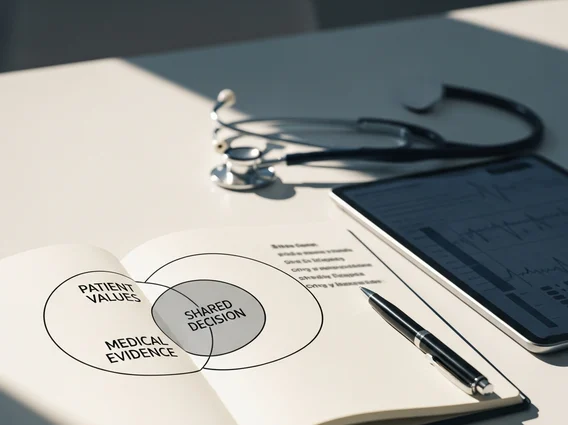
Shared Decision Making is a collaborative approach in healthcare where patients and clinicians work together to make informed decisions about medical care. This process ensures that treatment plans align with a patient’s values, preferences, and clinical evidence.
Key Takeaways
- Shared Decision Making (SDM) is a collaborative process between patients and clinicians.
- SDM involves discussing treatment options, their benefits and risks, and considering patient values.
- The shared decision making process typically includes inviting participation, exchanging information, and deliberating choices.
- The benefits of shared decision making include improved patient satisfaction, adherence to treatment, and better health outcomes.
- The importance of shared decision making lies in empowering patients and personalizing care.
What is Shared Decision Making?
Shared Decision Making (SDM) refers to a communication and decision-making process in which patients and their healthcare providers work together to select tests, treatments, management plans, or support services. It moves beyond the traditional model where a clinician solely dictates treatment, or a patient makes choices in isolation. Instead, it emphasizes a partnership where both parties bring unique expertise to the table: the clinician offers medical knowledge and evidence, while the patient contributes their personal values, preferences, and lived experiences.
The core principle of what is Shared Decision Making is to ensure that healthcare decisions are not only clinically appropriate but also personally relevant and acceptable to the patient. This approach is particularly crucial when there are multiple reasonable treatment options, each with varying benefits, risks, and implications for a patient’s quality of life. By fostering open dialogue, SDM helps bridge the gap between medical possibilities and individual patient realities, leading to more personalized and effective care.
The Shared Decision Making Process
The shared decision making process is typically structured to facilitate effective communication and mutual understanding. While specific steps may vary slightly depending on the clinical context, the fundamental components remain consistent. This process ensures that patients are not just passive recipients of information but active participants in their care journey.
Key steps in the Shared Decision Making process often include:
- Inviting Participation: The clinician initiates the conversation by explicitly inviting the patient to participate in the decision-making process, explaining that their input is valued and necessary.
- Presenting Options: The healthcare provider clearly outlines all reasonable treatment or management options, including the option of doing nothing, if applicable.
- Providing Information: For each option, the clinician explains the potential benefits, risks, side effects, and uncertainties using clear, understandable language, often with the aid of decision aids.
- Exploring Patient Values and Preferences: The clinician actively listens to and elicits the patient’s personal values, concerns, lifestyle, and priorities, understanding how these factors might influence their choice.
- Deliberation and Discussion: Patient and clinician discuss the options in light of the patient’s values, addressing any questions or misunderstandings. This is a collaborative phase of weighing pros and cons.
- Making a Decision: Together, the patient and clinician arrive at a decision that is medically sound and aligns with the patient’s informed preferences.
This structured approach ensures that all relevant information is considered and that the final decision reflects a true partnership.
Benefits of Shared Decision Making
The benefits of Shared Decision Making extend to both patients and healthcare systems, underscoring its growing recognition as a cornerstone of high-quality care. When patients are actively involved in their treatment choices, they tend to experience a greater sense of control and understanding, which can significantly impact their overall health journey.
One of the primary advantages is improved patient satisfaction. Studies have consistently shown that patients who engage in SDM report higher satisfaction with their care and their healthcare providers. This increased satisfaction often translates into better adherence to treatment plans, as patients are more likely to commit to decisions they helped make. For example, the Agency for Healthcare Research and Quality (AHRQ) emphasizes that SDM can lead to better patient understanding of their condition and treatment options, fostering a sense of empowerment.
Furthermore, the importance of Shared Decision Making is evident in its potential to lead to better health outcomes. When decisions are tailored to a patient’s specific values and lifestyle, they are more likely to choose treatments that they can realistically follow and that align with their personal goals. This can reduce decisional regret and improve the patient’s quality of life. SDM also helps in reducing healthcare costs by potentially decreasing the use of unwanted or ineffective treatments and by promoting more appropriate utilization of healthcare resources. It fosters trust between patients and clinicians, which is fundamental to effective long-term care management.