Pleural Cavity
The pleural cavity is a vital anatomical space within the chest that plays a crucial role in respiration by facilitating lung movement. Understanding its structure and function is essential for comprehending various respiratory conditions.
Key Takeaways
- The pleural cavity is a potential space between the parietal and visceral pleura surrounding each lung.
- Its primary purpose is to reduce friction during breathing, allowing the lungs to expand and contract smoothly.
- It contains a thin layer of pleural fluid, which acts as a lubricant and creates surface tension.
- Conditions like pleural effusion, pneumothorax, and pleurisy can significantly impair respiratory function.
What is the Pleural Cavity?
The Pleural Cavity refers to the potential space between the two membranes, known as pleura, that enclose each lung. This space is not empty but contains a thin film of serous fluid, the pleural fluid, which is critical for the mechanics of breathing. The pleural cavity definition and purpose highlight its role as a lubricated interface, enabling the lungs to move freely against the chest wall during inhalation and exhalation.
Each lung resides within its own pleural cavity, meaning there are two distinct pleural spaces in the human chest. This anatomical separation is a protective mechanism, as a problem in one cavity, such as a collapsed lung, typically does not directly affect the other.
Pleural Cavity Anatomy and Function
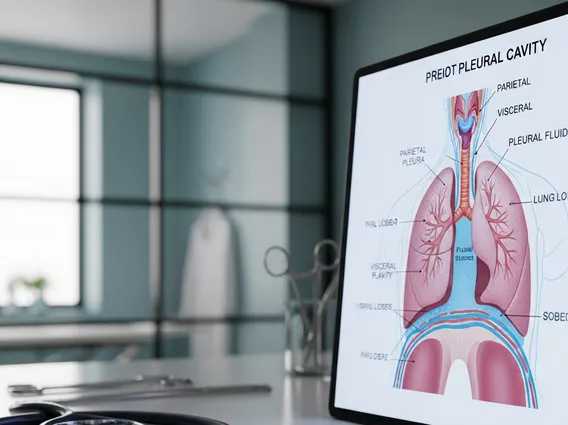
The pleural cavity function and anatomy are intricately linked, with each component contributing to efficient respiration. The pleura consists of two layers: the visceral pleura, which directly covers the lung surface, and the parietal pleura, which lines the inner surface of the chest wall, the diaphragm, and the mediastinum.
Between these two layers lies the pleural space, containing a small amount (typically 10-20 mL) of pleural fluid. This fluid serves two main functions:
- Lubrication: It reduces friction between the visceral and parietal pleura, allowing the lungs to glide effortlessly against the chest wall during breathing movements.
- Surface Tension: The fluid’s surface tension creates a cohesive force that keeps the two pleural layers in close proximity, effectively linking the lungs to the chest wall. This linkage ensures that as the chest wall expands, the lungs expand with it.
This mechanism is vital for maintaining negative intrapleural pressure, which is essential for drawing air into the lungs during inspiration and expelling it during expiration.
Conditions Affecting the Pleural Cavity
Various conditions can affect the diseases of the pleural cavity, often leading to significant respiratory distress. These conditions typically involve an imbalance in pleural fluid production or reabsorption, or the introduction of air or other substances into the pleural space.
Common conditions include:
- Pleural Effusion: This is the accumulation of excess fluid in the pleural cavity. It can be caused by heart failure, kidney disease, liver failure, infections (like pneumonia), or malignancies. For instance, an estimated 1.5 million cases of pleural effusion are diagnosed in the United States annually, highlighting its prevalence (American Thoracic Society).
- Pneumothorax: Characterized by the presence of air in the pleural cavity, leading to a collapsed lung. This can result from trauma, medical procedures, or spontaneously due to conditions like chronic obstructive pulmonary disease (COPD).
- Pleurisy (Pleuritis): Inflammation of the pleura, often causing sharp chest pain that worsens with deep breaths, coughing, or sneezing. It is commonly associated with viral infections but can also be due to bacterial infections, autoimmune diseases, or cancer.
- Hemothorax: The presence of blood in the pleural cavity, usually caused by trauma to the chest, surgery, or sometimes certain medical conditions.
- Empyema: A collection of pus in the pleural cavity, typically a complication of pneumonia or other chest infections, indicating a severe infection requiring prompt medical intervention.
Diagnosis of these conditions often involves imaging techniques such as chest X-rays, CT scans, and ultrasound, along with procedures like thoracentesis to analyze pleural fluid.