
Plasma Membrane
The plasma membrane is a vital biological barrier that encloses the cytoplasm of a cell, separating its internal environment from the outside world. This dynamic structure plays a critical role in maintaining cellular integrity and facilitating essential processes for life.
Key Takeaways
- The plasma membrane is a selectively permeable barrier composed primarily of a phospholipid bilayer, cholesterol, and various proteins.
- It regulates the passage of substances into and out of the cell, maintaining a stable internal environment.
- Key functions include cell recognition, signaling, adhesion, and the transport of nutrients and waste products.
- Its fluid mosaic model describes its dynamic nature, allowing components to move and adapt as needed.
- The integrity and proper functioning of the plasma membrane are crucial for overall cellular health and survival.
What is the Plasma Membrane: Structure and Components
The Plasma Membrane, also known as the cell membrane, is a complex, highly organized structure that forms the outer boundary of animal cells and lies just inside the cell wall in plant and bacterial cells. It is a selectively permeable barrier, meaning it controls which substances can enter or exit the cell, thereby maintaining the cell’s internal environment, a state known as homeostasis.
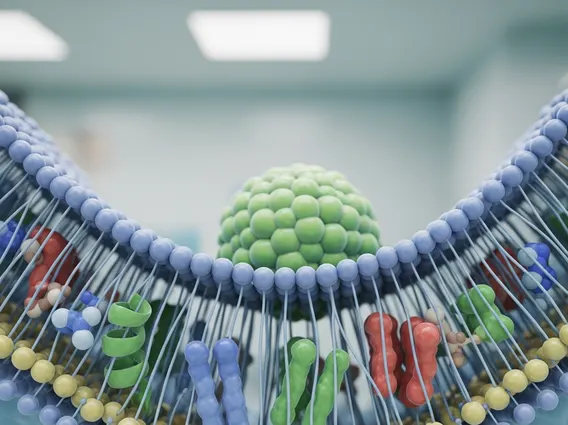
The fundamental organization of the plasma membrane structure and components is best described by the fluid mosaic model. This model depicts the membrane as a fluid-like bilayer of phospholipids in which various proteins are embedded or associated. The primary components include:
- Phospholipids: These molecules form the basic bilayer, with hydrophilic (water-loving) heads facing the aqueous environment inside and outside the cell, and hydrophobic (water-fearing) tails forming the interior of the membrane. This arrangement creates a barrier to water-soluble molecules.
- Cholesterol: Embedded within the phospholipid bilayer, cholesterol molecules help regulate the fluidity and stability of the membrane, preventing it from becoming too rigid or too fluid at varying temperatures.
- Proteins: Integral proteins are embedded within the bilayer, often spanning the entire membrane, while peripheral proteins are loosely attached to the surface. These proteins perform a wide array of functions, including transport, enzymatic activity, signal transduction, and cell-cell recognition.
- Carbohydrates: Often found on the outer surface of the plasma membrane, attached to proteins (glycoproteins) or lipids (glycolipids), carbohydrates play crucial roles in cell recognition, adhesion, and immune responses.
The dynamic nature of these components allows the membrane to be flexible and capable of self-repair, essential for the cell’s survival and interaction with its surroundings.
What is the Function of the Plasma Membrane?
The plasma membrane performs a multitude of essential functions that are critical for cell survival and communication. Its primary role is to act as a gatekeeper, regulating the movement of substances. This selective permeability ensures that necessary nutrients, ions, and water enter the cell, while waste products and unwanted substances are expelled. The importance of plasma membrane in cells cannot be overstated, as it underpins virtually all cellular activities.
The sophisticated mechanisms by which the plasma membrane works involve various transport processes. Small, nonpolar molecules like oxygen and carbon dioxide can diffuse directly across the lipid bilayer. However, larger molecules, ions, and polar molecules require assistance. This assistance comes in several forms:
| Transport Mechanism | Description | Energy Requirement |
|---|---|---|
| Passive Diffusion | Movement of small, nonpolar molecules directly across the lipid bilayer down their concentration gradient. | None |
| Facilitated Diffusion | Movement of polar molecules or ions across the membrane with the help of specific protein channels or carriers, down their concentration gradient. | None |
| Active Transport | Movement of substances against their concentration gradient, requiring energy (typically ATP) and specific protein pumps. | Yes (ATP) |
| Bulk Transport (Endocytosis/Exocytosis) | Movement of large molecules or particles into (endocytosis) or out of (exocytosis) the cell via membrane-bound vesicles. | Yes (ATP) |
Beyond transport, the plasma membrane is integral to cell communication. Receptor proteins embedded in the membrane bind to specific signaling molecules (ligands) from the extracellular environment, initiating a cascade of events inside the cell. This process, known as signal transduction, allows cells to respond to hormones, growth factors, and neurotransmitters, coordinating cellular activities throughout tissues and organs. Furthermore, the membrane facilitates cell-cell recognition and adhesion through its surface carbohydrates and proteins, which are vital for tissue formation, immune responses, and preventing uncontrolled cell growth.
The information provided in this article is for educational purposes only and does not constitute medical advice. Always consult with a qualified healthcare professional for any health concerns or before making any decisions related to your health or treatment.



















