Phrenic Nerve
The phrenic nerve plays a vital role in human respiration, acting as the sole motor supply to the diaphragm. Understanding its anatomy, function, and the implications of its damage is crucial for comprehending respiratory health and related medical conditions.
Key Takeaways
- The Phrenic Nerve originates from cervical spinal nerves C3-C5 and is essential for breathing.
- It is the primary motor nerve for the diaphragm, the main muscle responsible for inspiration.
- Damage to the phrenic nerve can lead to diaphragm paralysis, causing significant respiratory distress.
- Symptoms of phrenic nerve damage include shortness of breath, especially when lying down, and paradoxical abdominal movement.
- Its location and pathway make it susceptible to injury from various causes, including trauma and surgical procedures.
What is the Phrenic Nerve: Anatomy and Location
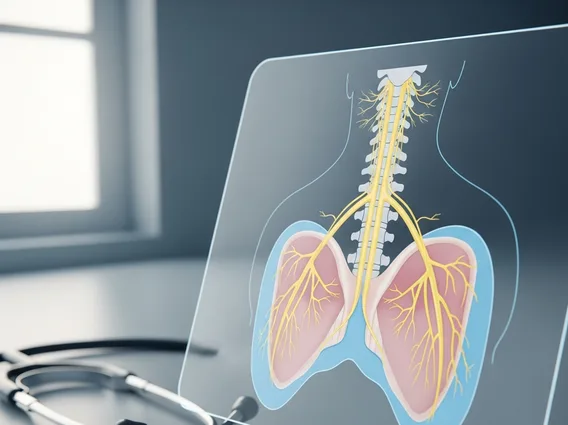
The Phrenic Nerve refers to a critical mixed motor and sensory nerve that originates in the neck and descends into the thorax to innervate the diaphragm. It is formed from the anterior rami of the third, fourth, and fifth cervical spinal nerves (C3, C4, C5), with the C4 segment typically providing the largest contribution. This specific origin is often remembered by the mnemonic “C3, 4, 5 keeps the diaphragm alive,” highlighting its indispensable role in maintaining respiration.
To understand its precise position, consider where is the phrenic nerve located within the body. After its formation in the neck, the phrenic nerve travels inferiorly, passing anterior to the subclavian artery and posterior to the subclavian vein. It then enters the mediastinum, running between the pleura and the pericardium, alongside the heart. The right phrenic nerve typically passes anterior to the root of the right lung, while the left phrenic nerve passes anterior to the root of the left lung. Both nerves continue their descent until they reach the diaphragm, where they branch out to supply its motor and sensory functions. This intricate phrenic nerve anatomy and function ensures the coordinated movement necessary for effective breathing.
Phrenic Nerve Function and Damage Symptoms
The primary aspect of phrenic nerve anatomy and function is to provide motor innervation to the diaphragm, the dome-shaped muscle that separates the thoracic and abdominal cavities. Contraction of the diaphragm, facilitated by the phrenic nerve, flattens the muscle, increasing the vertical dimension of the thoracic cavity and drawing air into the lungs during inspiration. It also provides sensory innervation to the central part of the diaphragm, the mediastinal pleura, and the pericardium. Beyond its role in quiet breathing, the phrenic nerve is also involved in reflexes such as coughing, sneezing, and hiccups, which are involuntary contractions of the diaphragm.
When the phrenic nerve is compromised or damaged, it can lead to significant respiratory impairment. Phrenic nerve damage symptoms vary depending on whether one or both nerves are affected, and the extent of the injury. Unilateral phrenic nerve palsy, affecting one side, can result in weakness or paralysis of half of the diaphragm. This often manifests as:
- Shortness of breath (dyspnea), particularly during exertion or when lying flat (orthopnea).
- Reduced exercise tolerance due to decreased lung capacity.
- Recurrent pneumonia, as impaired lung expansion can lead to poor clearance of respiratory secretions.
- Paradoxical abdominal movement during inspiration, where the abdomen moves inward instead of outward.
Bilateral phrenic nerve damage, affecting both nerves, is a more severe condition that can lead to complete diaphragm paralysis and acute respiratory failure, often requiring mechanical ventilation. Causes of phrenic nerve damage can include surgical trauma (especially during cardiac or thoracic procedures), tumors compressing the nerve, neurological disorders (e.g., Guillain-Barré syndrome, motor neuron disease), cervical spine injuries, and viral infections. Early diagnosis and management are crucial to mitigate the impact on respiratory function and improve patient outcomes.