Peritoneal Fluid
Peritoneal fluid plays a vital role in the abdominal cavity, facilitating organ movement and providing immune defense. Understanding its composition and potential abnormalities is crucial for diagnosing various medical conditions.
Key Takeaways
- Peritoneal Fluid is a lubricating fluid within the abdominal cavity that reduces friction between organs.
- It also contains immune cells and proteins, contributing to the body’s defense against infection.
- Abnormal accumulation or changes in peritoneal fluid can indicate underlying health issues, such as inflammation, infection, or malignancy.
- Analysis of peritoneal fluid involves examining its physical, chemical, and cellular properties to aid in diagnosis.
- Common causes of abnormal peritoneal fluid include liver disease, heart failure, infections, and certain cancers.
What is Peritoneal Fluid and Its Function?
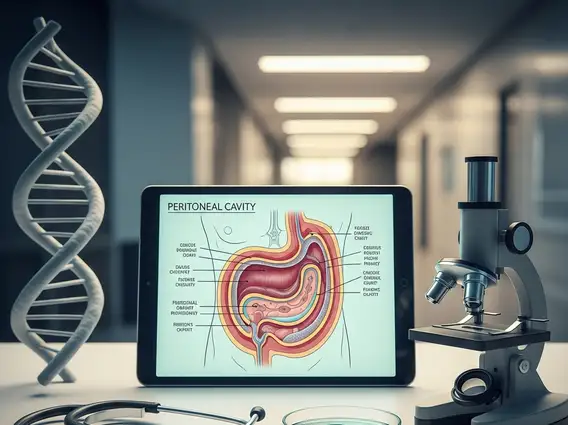
Peritoneal Fluid is a clear, straw-colored serous fluid found within the peritoneal cavity, the space between the parietal peritoneum (lining the abdominal wall) and the visceral peritoneum (covering the abdominal organs). This fluid acts primarily as a lubricant, allowing the abdominal organs to glide smoothly against each other with minimal friction during movement, such as digestion and respiration. The total volume of normal peritoneal fluid is typically small, usually less than 50 milliliters.
Beyond lubrication, the peritoneal fluid function also includes providing a medium for the exchange of substances and contributing to the immune system. It contains various cells, including macrophages and lymphocytes, which are essential for immune surveillance and responding to infections within the abdominal cavity. Furthermore, it helps in the distribution of nutrients and removal of waste products, although its role in this regard is less prominent than that of blood and lymphatic systems. The peritoneum itself is a semi-permeable membrane, facilitating this exchange.
Causes of Abnormal Peritoneal Fluid
An increase in the volume of peritoneal fluid, known as ascites, or changes in its composition, often signals an underlying medical condition. The peritoneal fluid causes for such abnormalities are diverse and can range from benign to life-threatening. The most common cause of ascites globally is liver cirrhosis, accounting for approximately 80% of cases, where impaired liver function leads to portal hypertension and fluid leakage.
Other significant causes include:
- Heart Failure: Congestive heart failure can lead to increased pressure in the veins, causing fluid to leak into the peritoneal cavity.
- Kidney Disease: Severe kidney disease, particularly nephrotic syndrome, can result in low protein levels in the blood, leading to fluid retention and ascites.
- Infections: Peritonitis, an inflammation of the peritoneum, often caused by bacterial infections (e.g., spontaneous bacterial peritonitis in cirrhosis patients) or fungal infections, can lead to increased fluid production and accumulation.
- Malignancy: Cancers originating in or spreading to the abdominal cavity (e.g., ovarian, colon, pancreatic cancer) can cause malignant ascites by obstructing lymphatic drainage or directly producing fluid.
- Pancreatitis: Inflammation of the pancreas can release enzymes that irritate the peritoneum, leading to fluid accumulation.
- Tuberculosis: Tuberculous peritonitis is a less common but significant cause, especially in endemic areas.
Peritoneal Fluid Analysis and Diagnosis
When abnormal peritoneal fluid is suspected, a procedure called paracentesis is performed to collect a sample for peritoneal fluid analysis. This diagnostic test is crucial for determining the cause of ascites and guiding appropriate treatment. The fluid is typically analyzed for several parameters:
- Appearance: Normal fluid is clear and straw-colored. Cloudy fluid may indicate infection, while bloody fluid could suggest trauma or malignancy.
- Cell Count: An elevated white blood cell count, particularly neutrophils, points towards infection (e.g., spontaneous bacterial peritonitis). Malignant cells can be identified through cytology.
- Protein and Albumin Levels: These measurements help differentiate between transudative ascites (low protein, often due to liver or heart failure) and exudative ascites (high protein, often due to inflammation, infection, or malignancy). The serum-ascites albumin gradient (SAAG) is a highly accurate tool for this differentiation. A SAAG ≥ 1.1 g/dL suggests portal hypertension (e.g., cirrhosis, heart failure), while a SAAG < 1.1 g/dL suggests other causes (e.g., malignancy, infection).
- Glucose, Lactate Dehydrogenase (LDH), and Amylase: These markers can provide further clues. Low glucose and high LDH may indicate infection or malignancy, while high amylase suggests pancreatic involvement.
- Microbiology: Culture and Gram stain are performed to identify bacterial or fungal infections.
The results of this comprehensive analysis allow clinicians to make an accurate diagnosis and initiate targeted therapy, which is essential for managing the underlying condition effectively.