Perineural
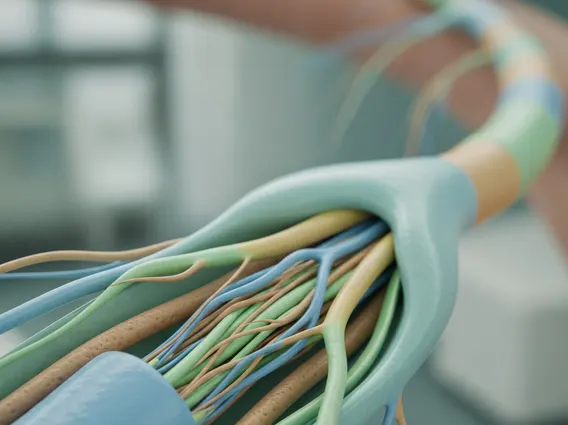
The term Perineural refers to structures or processes associated with the perineurium, a vital connective tissue layer that encases nerve fascicles. Understanding its anatomy and function is crucial in both normal physiological contexts and various pathological conditions, particularly in oncology.
Key Takeaways
- Perineural describes anything related to the perineurium, the protective sheath around nerve bundles.
- The perineural sheath safeguards nerve fibers, maintains their microenvironment, and forms the blood-nerve barrier.
- Perineural invasion medical term signifies cancer cells spreading along nerves, indicating a more aggressive disease.
- Identifying perineural invasion is critical for cancer staging, prognosis, and guiding treatment decisions.
- The intricate **perineural nerve anatomy** highlights its role in nerve integrity and function.
What is Perineural?
Perineural is an anatomical and medical descriptor indicating a relationship to the perineurium, which is a specialized connective tissue sheath. This sheath surrounds bundles of nerve fibers, known as fascicles, within a peripheral nerve. It forms a crucial protective barrier, separating the internal environment of the nerve fascicle from the surrounding tissues. The intricate **perineural nerve anatomy** is essential for maintaining the structural integrity and physiological function of the nervous system, ensuring the proper transmission of nerve impulses.
Perineural Sheath: Anatomy and Function
The perineural sheath function is multifaceted, providing both structural support and physiological protection to the delicate nerve fibers it encloses. Composed of several concentric layers of flattened cells, the perineurium creates a robust barrier that is selectively permeable. This barrier is critical for maintaining the unique chemical environment necessary for nerve conduction, often referred to as the blood-nerve barrier. Its primary roles include:
- Mechanical Protection: Shielding nerve fibers from physical compression and stretching.
- Chemical Barrier: Regulating the passage of substances into and out of the nerve fascicle, maintaining homeostasis.
- Pressure Regulation: Helping to maintain intrafascicular pressure, which is important for nerve health.
- Immune Privilege: Contributing to the immune isolation of the nerve, protecting it from inflammatory responses.
These functions are vital for the proper functioning and long-term health of peripheral nerves, allowing them to transmit signals effectively throughout the body.
Perineural Invasion: Medical Term and Significance
The perineural invasion medical term refers to the pathological process where cancer cells infiltrate and spread along nerves. This phenomenon is a significant indicator in oncology, often associated with more aggressive tumor behavior and a poorer prognosis. When cancer cells invade the perineurium, they gain a pathway to spread locally, regionally, and potentially distantly, utilizing the nerve as a conduit. This can lead to local recurrence, increased risk of metastasis, and challenges in achieving complete surgical resection.
Perineural invasion is commonly observed in various cancers, including head and neck squamous cell carcinoma, pancreatic adenocarcinoma, colorectal cancer, and prostate cancer. Its presence is typically identified during histopathological examination of tumor samples. For instance, studies have shown that perineural invasion is a strong independent prognostic factor in pancreatic cancer, often correlating with reduced survival rates. According to the World Health Organization (WHO), the identification of perineural invasion is a critical component of tumor staging and grading, guiding clinicians in determining the most appropriate treatment strategies, which may include more aggressive surgery, radiation therapy, or systemic chemotherapy, to improve patient outcomes.