Pancoast Tumor
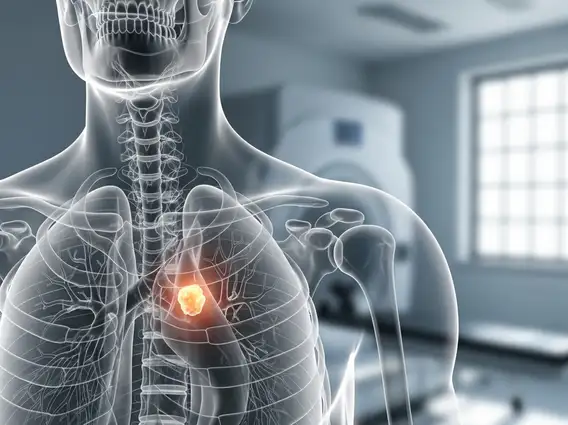
A Pancoast Tumor is a rare and specific type of lung cancer that develops in the apex of the lung, presenting unique diagnostic and treatment challenges due to its location and proximity to critical structures.
Key Takeaways
- Pancoast tumors are a distinct type of lung cancer located at the top of the lung.
- They often cause severe shoulder and arm pain, along with neurological symptoms like Horner’s syndrome.
- Diagnosis relies on imaging techniques such as CT, MRI, and PET scans, followed by a biopsy.
- Treatment typically involves a combination of radiation, chemotherapy, and surgery.
- Early detection is crucial for improving prognosis due to the tumor’s aggressive local growth.
What is Pancoast Tumor?
A Pancoast Tumor refers to a relatively rare form of lung cancer that originates in the superior sulcus, the groove at the very top of the lung. This specific location distinguishes it from other lung cancers, as it often invades surrounding structures such as the ribs, vertebrae, nerves (particularly the brachial plexus), and blood vessels in the chest inlet. While most Pancoast tumors are a type of non-small cell lung cancer (NSCLC), their anatomical position leads to a distinct set of symptoms and diagnostic considerations. According to the American Cancer Society, lung cancer remains a leading cause of cancer death, with Pancoast tumors representing a small percentage of these cases, typically less than 5%.
Pancoast Tumor Symptoms, Causes, and Diagnosis
The unique location of the tumor dictates the characteristic pancoast tumor symptoms and causes. These tumors frequently compress or invade nerves and blood vessels in the upper chest, leading to specific neurological and pain-related issues. The most common symptoms are often related to nerve compression in the shoulder and arm, which can be debilitating. These may include:
- Severe pain in the shoulder and arm, often radiating down the inner aspect of the arm to the hand.
- Weakness, tingling, or numbness in the hand and arm muscles.
- Horner’s syndrome, characterized by a drooping eyelid (ptosis), constricted pupil (miosis), and decreased sweating (anhidrosis) on the same side of the face as the tumor.
- Pain in the armpit or inner aspect of the arm.
The primary cause of Pancoast tumors, like most lung cancers, is smoking, which accounts for a significant majority of cases. However, they can also occur in non-smokers due to other risk factors such as exposure to radon gas, asbestos, or air pollution. Genetic predispositions may also play a role in some individuals.
Diagnosing Pancoast Tumor typically involves a multi-step process due to its complex presentation. Initial evaluation often includes a thorough physical examination and a detailed patient history, focusing on the characteristic pain and neurological symptoms. Imaging studies are crucial for identifying the tumor and assessing its extent. These usually begin with chest X-rays, followed by more advanced techniques such as computed tomography (CT) scans, magnetic resonance imaging (MRI) of the chest and brachial plexus, and positron emission tomography (PET) scans to evaluate tumor size, local invasion, and potential metastasis. A definitive diagnosis requires a biopsy of the tumor tissue, which can be performed via CT-guided needle biopsy, bronchoscopy, or surgical biopsy.
Pancoast Tumor Treatment Options
Effective pancoast tumor treatment options usually involve a multidisciplinary approach due to the tumor’s complex location and potential for local invasion. The primary goal of treatment is to remove or shrink the tumor, manage symptoms, and improve the patient’s quality of life. Treatment strategies are highly individualized, depending on the tumor’s stage, the patient’s overall health, and the extent of local invasion.
Treatment often begins with neoadjuvant therapy, which is administered before surgery. This typically includes a combination of radiation therapy and chemotherapy. The purpose of neoadjuvant therapy is to reduce the tumor size, making it more amenable to surgical resection and potentially improving surgical outcomes. Radiation therapy targets cancer cells with high-energy rays, while chemotherapy uses drugs to kill cancer cells throughout the body.
Surgery, when feasible, is a cornerstone of treatment for resectable Pancoast tumors. This complex procedure involves removing the tumor along with any affected surrounding structures, such as parts of the ribs, vertebrae, or nerves. However, due to the tumor’s proximity to vital structures, surgery can be challenging and carries significant risks, making it unsuitable for all patients. For those who undergo surgery, additional radiation therapy or chemotherapy may be used post-operatively to eliminate any remaining cancer cells and reduce the risk of recurrence. Emerging therapies, including targeted therapy and immunotherapy, are also becoming available for specific cases, particularly when the tumor exhibits certain genetic mutations or characteristics.