Organelle
An Organelle refers to a specialized subunit within a cell that has a specific function. These microscopic structures are fundamental components of eukaryotic cells, playing critical roles in maintaining cellular life processes, much like organs function within a multicellular organism.
Key Takeaways
- Organelles are specialized structures found within cells, primarily eukaryotic cells.
- Each organelle performs distinct functions essential for the cell’s survival and overall operation.
- Key examples include the nucleus, mitochondria, endoplasmic reticulum, and Golgi apparatus.
- They compartmentalize cellular activities, allowing for efficient and regulated biochemical processes.
- Understanding organelles is fundamental to comprehending cellular biology and its implications in health and disease.
What is an Organelle?
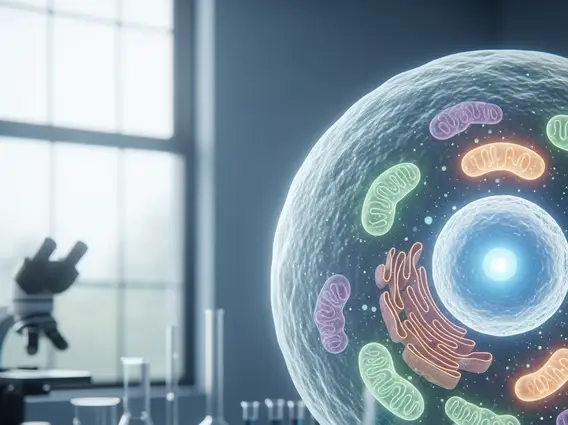
An Organelle is a subcellular structure that performs one or more specific jobs in the cell. These structures are integral to the intricate machinery of eukaryotic cells, where they are typically enclosed by their own lipid membranes, separating their internal environments from the cell’s cytoplasm. This crucial compartmentalization allows for the efficient execution of diverse biochemical reactions and processes, preventing interference and optimizing cellular function.
The concept of an organelle definition and examples highlights their indispensable role in cellular life. For instance, the nucleus houses the cell’s genetic material, directing cellular activities, while mitochondria are vital for energy production. Without these specialized components, cells would be unable to carry out the complex tasks required for metabolism, growth, and reproduction. Their coordinated actions ensure the cell functions as a cohesive unit, underpinning all biological activity and making them a central focus in fields ranging from basic biology to medical research.
Types of Organelles and Their Essential Functions
Eukaryotic cells contain a diverse array of organelles, each possessing a unique structure tailored to a specific role in maintaining cellular homeostasis. Understanding the various types of organelles and their respective function of cell organelles is crucial for grasping how cells operate and interact within tissues and organisms. Here are some of the most prominent organelles and their primary functions:
- Nucleus: Often considered the control center of the cell, the nucleus contains the cell’s genetic material (DNA) organized into chromosomes. Its primary function is to regulate gene expression, control protein synthesis, and mediate the replication of DNA during the cell cycle, ensuring genetic continuity.
- Mitochondria: Known as the “powerhouses” of the cell, mitochondria are responsible for generating most of the cell’s supply of adenosine triphosphate (ATP) through cellular respiration. ATP serves as the primary energy currency for nearly all cellular processes.
- Endoplasmic Reticulum (ER): The ER is an extensive network of membranes involved in protein and lipid synthesis. The rough ER (studded with ribosomes) is crucial for synthesizing and folding proteins destined for secretion or insertion into membranes, while the smooth ER is involved in lipid synthesis, detoxification of drugs and poisons, and calcium ion storage.
- Golgi Apparatus: This organelle modifies, sorts, and packages proteins and lipids synthesized in the ER for secretion or delivery to other organelles. It acts like a cellular post office, ensuring molecules reach their correct destinations.
- Lysosomes: These are membrane-bound organelles containing powerful digestive enzymes. Their main function is to break down waste materials, cellular debris, and foreign substances ingested by the cell, playing a critical role in cellular recycling and defense.
- Ribosomes: Though not membrane-bound, ribosomes are essential cellular components responsible for protein synthesis (translation). They can be found floating freely in the cytoplasm, producing proteins for use within the cell, or attached to the rough ER, synthesizing proteins for export or membrane integration.
- Vacuoles: While particularly large and central in plant cells, where they store water, nutrients, and waste products, vacuoles in animal cells are smaller and more transient. They are involved in storage, transport, and waste removal, contributing to cellular turgor in plants.
The intricate interplay and coordinated activities among these organelles allow cells to perform highly complex tasks, from energy production and waste management to protein synthesis and genetic regulation. Each organelle contributes uniquely to the cell’s overall functionality, making them indispensable for life and a key area of study in biology and medicine.