Transcription Factor
Transcription Factors are essential proteins that play a pivotal role in gene expression, controlling when and where genes are turned on or off. They are fundamental to all life processes, from development and differentiation to the body’s response to disease.
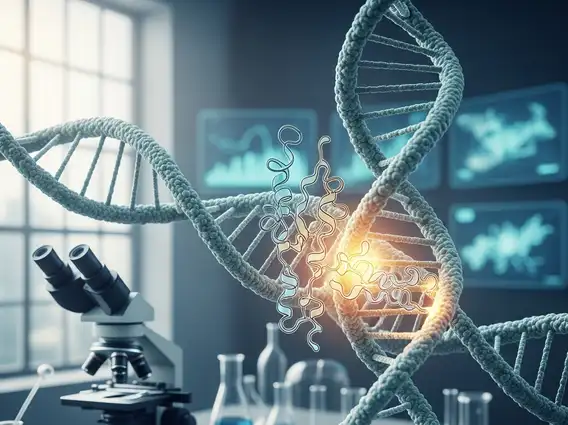
Key Takeaways
- Transcription Factors are proteins that regulate gene expression by binding to specific DNA sequences.
- They control the rate at which genetic information is copied from DNA to messenger RNA (mRNA).
- Their functions are crucial for cell growth, differentiation, metabolism, and immune response.
- There are various types, including general, specific, and inducible transcription factors, each with distinct roles.
- Dysregulation of Transcription Factors can lead to numerous diseases, including cancer and developmental disorders.
What is a Transcription Factor?
A Transcription Factor refers to a protein that binds to specific DNA sequences, thereby controlling the rate of transcription of genetic information from DNA to messenger RNA (mRNA). These proteins act as molecular switches, turning genes “on” or “off” by either promoting or blocking the recruitment of RNA polymerase, the enzyme responsible for synthesizing RNA. Without Transcription Factors, the complex process of gene regulation, which dictates cell identity and function, would not be possible. They are integral to virtually every cellular process, ensuring that the right genes are expressed at the right time and in the right cells.
How Transcription Factors Work and Their Functions
Transcription Factors operate through a sophisticated mechanism involving several key steps to regulate gene expression. They typically possess distinct domains: a DNA-binding domain (DBD) that recognizes and attaches to specific DNA sequences, and an activation or repression domain that interacts with other proteins, including RNA polymerase or co-activators/co-repressors. When a Transcription Factor binds to its target DNA sequence, often located in regulatory regions like promoters or enhancers, it can either facilitate or impede the transcription process.
The primary transcription factor function is to modulate gene expression, which is vital for numerous biological processes. Their functions include:
- Cell Differentiation: Guiding stem cells to develop into specialized cell types (e.g., muscle cells, neurons).
- Development: Orchestrating the precise sequence of gene activation required for embryonic development and organ formation.
- Metabolism: Regulating genes involved in energy production, nutrient processing, and waste removal.
- Immune Response: Activating genes that produce immune cells and signaling molecules to combat infections.
- Cell Growth and Division: Controlling the cell cycle and preventing uncontrolled proliferation, which is crucial in preventing diseases like cancer.
For instance, the p53 Transcription Factor is a well-known tumor suppressor that activates genes involved in DNA repair or programmed cell death when cellular damage occurs. Conversely, some Transcription Factors can promote cell growth, and their overactivity can contribute to oncogenesis. The intricate interplay of these proteins ensures cellular homeostasis and proper physiological responses.
Types of Transcription Factors
Transcription Factors are broadly categorized based on their structure, mechanism of action, and the genes they regulate. Understanding these types of transcription factors is crucial for comprehending their diverse roles in biology.
Here are some common classifications:
- General Transcription Factors (GTFs): These are essential for the transcription of all protein-coding genes. They assemble at the core promoter region of genes to form the pre-initiation complex (PIC) with RNA polymerase II, enabling basal transcription. Examples include TFIIB, TFIID, and TFIIH.
- Specific Transcription Factors: Also known as regulatory Transcription Factors, these proteins bind to enhancer or silencer sequences, which are often located far from the gene’s promoter. They regulate the transcription of specific genes in response to particular cellular signals or developmental cues. Examples include steroid hormone receptors and STAT proteins.
- Inducible Transcription Factors: These are activated or deactivated in response to specific external or internal stimuli, such as hormones, growth factors, stress, or pathogens. Their activity allows cells to adapt rapidly to changing environmental conditions. NF-κB, a key regulator of immune responses, is a prime example.
- Developmental Transcription Factors: These play critical roles during embryonic development, controlling cell fate decisions and pattern formation. Homeobox proteins are a well-known class of developmental Transcription Factors.
The vast array of Transcription Factors, estimated to be over 1,600 in humans, highlights their central role in orchestrating the complex symphony of gene expression that defines life. Dysregulation in any of these types can have profound effects on health, contributing to a wide range of human diseases.