
Parametrium
The parametrium is a crucial anatomical structure within the female pelvis, playing a significant role in supporting the uterus and surrounding organs. Understanding its composition and function is essential for comprehending the broader anatomy of the female reproductive system.
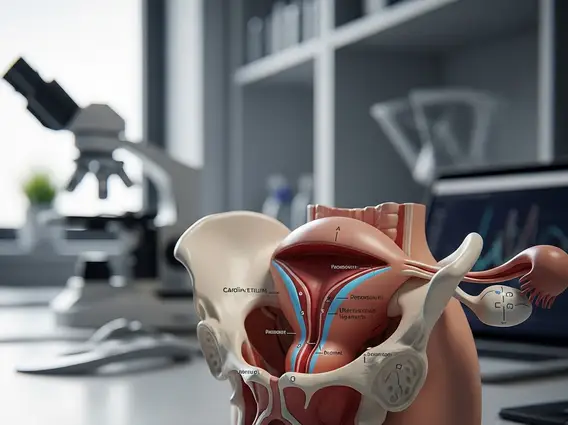
Key Takeaways
- The parametrium is a dense, fibrous connective tissue supporting the uterus.
- It is located lateral to the uterus within the broad ligament, continuous with pelvic connective tissue.
- Its primary function is to provide structural support and house vital vessels, nerves, and lymphatic channels.
- It is distinct from the uterine wall layers (myometrium and perimetrium).
- Clinical understanding of the parametrium is important in gynecological oncology, particularly for staging cervical cancer.
What is the Parametrium?
Parametrium refers to the dense, fibrous connective tissue and adipose tissue that surrounds the uterus, extending laterally between the layers of the broad ligament. This crucial anatomical region provides essential support for the uterus and serves as a conduit for various neurovascular structures. The parametrium medical definition specifies it as the extraperitoneal connective tissue situated lateral to the uterus, continuous with the connective tissue of the pelvic floor and extending into the cardinal and uterosacral ligaments.
The parametrium location female pelvis is precisely positioned lateral to the uterine body and cervix, within the confines of the broad ligament. This ligament, a wide fold of peritoneum, drapes over the uterus and extends to the lateral walls of the pelvis. The parametrium is distinct from the myometrium, which is the muscular wall of the uterus, and the perimetrium, the serous outer layer of the uterus. Its strategic placement allows it to anchor the uterus securely while accommodating the physiological movements and changes the organ undergoes, such as during the menstrual cycle and pregnancy. This robust support system is vital for maintaining the proper alignment and function of the female reproductive organs.
Anatomy and Function of the Parametrium
The parametrium anatomy and function are intricately linked, highlighting its multifaceted role in pelvic support and physiological processes. Anatomically, the parametrium is a complex matrix composed primarily of loose areolar connective tissue, rich in collagen and elastic fibers, interspersed with adipose tissue. This matrix embeds vital structures, including:
- Blood Vessels: The uterine arteries and veins traverse the parametrium, providing the primary vascular supply and drainage for the uterus, fallopian tubes, and ovaries.
- Lymphatic Vessels: A dense network of lymphatic channels is present, crucial for draining lymph from the uterus, cervix, and upper vagina, playing a significant role in the body’s immune response and the spread of gynecological cancers.
- Nerve Fibers: Autonomic nerve fibers, both sympathetic and parasympathetic, pass through the parametrium, innervating the uterus and regulating its muscular contractions and glandular secretions. These nerves are essential for uterine function, including labor.
- Ligamentous Components: While not strictly part of the parametrium itself, the parametrium is continuous with and surrounds the cardinal ligaments (transverse cervical ligaments) and uterosacral ligaments, which are primary supports for the uterus and cervix.
Functionally, the parametrium serves several critical purposes. Its primary role is to provide robust structural support for the uterus, helping to maintain its anteverted and anteflexed position within the pelvic cavity. This support is crucial for the overall integrity of the female reproductive system. Furthermore, by housing and protecting the neurovascular bundles, it acts as a vital conduit, facilitating the efficient delivery of oxygen and nutrients to the uterus and removal of metabolic waste products. The lymphatic drainage system within the parametrium is also paramount for preventing fluid accumulation and for immune surveillance. Clinically, the parametrium’s involvement is a key factor in staging gynecological cancers, particularly cervical cancer, where parametrial invasion signifies a more advanced disease stage (e.g., Stage IIB cervical cancer, according to recognized medical guidelines). This makes its assessment critical in treatment planning and prognosis.



















