
Intramuscular
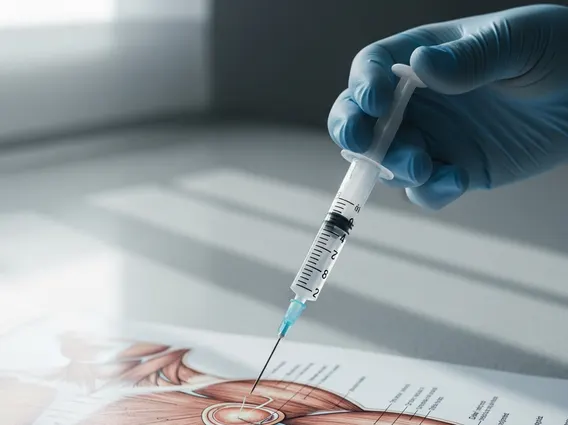
Intramuscular refers to the administration of a substance directly into a muscle. This method is commonly used in medicine for delivering medications and vaccines, offering a route for rapid absorption into the bloodstream.
Key Takeaways
- Intramuscular (IM) injections deliver substances deep into muscle tissue for systemic absorption.
- Common injection sites include the deltoid, vastus lateralis, and ventrogluteal muscles, chosen for their muscle mass and distance from major nerves and blood vessels.
- Proper administration involves selecting the correct needle size, angle, and technique to ensure efficacy and minimize discomfort.
- Benefits include faster absorption and the ability to administer larger volumes compared to subcutaneous injections.
- Potential risks include pain, bruising, nerve damage, or infection, which can be mitigated by correct technique and site selection.
What is Intramuscular Injection?
Intramuscular (IM) refers to the route of administration where a substance, typically a medication or vaccine, is delivered directly into the deep muscle tissue. This method allows for the rapid absorption of the substance into the bloodstream due to the rich blood supply within muscles. An intramuscular injection is a common medical procedure performed by healthcare professionals to administer various treatments, including many vaccines, antibiotics, and hormonal therapies.
The muscle tissue has a greater capacity for volume and a more extensive vascular network compared to subcutaneous tissue, leading to quicker systemic distribution of the medication. This makes IM injections suitable for drugs that require fast action or those that are irritating to subcutaneous tissue. The specific characteristics of the medication, such as its viscosity and volume, influence the choice of injection site and needle size to ensure optimal delivery and patient comfort.
Intramuscular Injection Sites and Administration
Administering an intramuscular shot requires careful attention to site selection and technique to ensure safety and efficacy. The choice of injection site is crucial to avoid major nerves, blood vessels, and bones, while also ensuring sufficient muscle mass for proper absorption. Understanding the anatomy of these areas is paramount for healthcare providers.
Commonly utilized intramuscular injection sites include:
- Deltoid Muscle: Located in the upper arm, this site is suitable for smaller volumes (typically up to 1 mL) and is frequently used for vaccines.
- Vastus Lateralis Muscle: Found in the thigh, this site is often preferred for infants and young children due to its well-developed muscle, and can accommodate larger volumes (up to 3 mL).
- Ventrogluteal Muscle: Located on the side of the hip, this site is considered safe for adults and children over seven months due to its distance from major nerves and blood vessels, allowing for larger volumes (up to 3 mL).
To administer an intramuscular shot, the skin is typically cleaned, and the needle is inserted at a 90-degree angle to ensure it reaches the muscle layer. The specific needle length and gauge are selected based on the patient’s age, muscle mass, and the viscosity of the medication. Proper technique minimizes pain and reduces the risk of complications, making patient education on post-injection care also important.
Benefits and Risks of Intramuscular Injections
Intramuscular injections offer several advantages that make them a preferred route for certain medications. One primary benefit is the relatively rapid absorption rate compared to oral or subcutaneous routes, as muscle tissue is highly vascularized. This allows medications to reach the bloodstream and exert their effects more quickly. Additionally, IM injections can accommodate larger volumes of medication (typically up to 3 mL, depending on the site) than subcutaneous injections, making them suitable for doses that would be too large for other parenteral routes. They are also effective for medications that may be poorly absorbed or irritating when given orally.
Despite their benefits, intramuscular injections carry potential risks and complications. These can include localized pain, soreness, bruising, or swelling at the injection site. More serious, though less common, risks involve nerve damage if the needle strikes a nerve, or blood vessel damage leading to hematoma formation. Infection is another potential risk if aseptic technique is not strictly followed. Allergic reactions to the medication itself can also occur. Healthcare professionals mitigate these risks through careful site selection, proper needle size, correct injection technique, and adherence to sterile procedures, ensuring patient safety and optimal treatment outcomes.



















