Totipotent
Totipotency is a fundamental concept in biology, particularly in the study of developmental biology and stem cell research. It describes the unique ability of a single cell to differentiate and develop into a complete organism, encompassing all cell types, including extraembryonic tissues.
Key Takeaways
- Totipotent refers to a cell’s ability to differentiate into all cell types, including those forming the placenta and other extraembryonic tissues.
- The zygote and the first few cells after fertilization are the primary examples of totipotent cells.
- These cells possess the broadest developmental potential, capable of forming an entire organism.
- Totipotent stem cells are crucial for early embryonic development.
- Totipotency differs from pluripotency, where cells can form all cell types of the body but not extraembryonic tissues.
What is Totipotent?
Totipotent refers to the unique capability of a single cell to differentiate and develop into a complete organism. This means a totipotent cell can give rise to all cell types of the body, as well as the extraembryonic tissues that support fetal development, such as the placenta and umbilical cord. This characteristic represents the highest degree of developmental plasticity in a cell, making it capable of forming every single cell required for a living being.
The most prominent example of a totipotent cell is the zygote, formed immediately after the fertilization of an egg by a sperm. Following fertilization, the zygote undergoes rapid cell division, and the cells resulting from the first few divisions (typically up to the 8-cell stage in humans) also retain this totipotency. Each of these early embryonic cells, known as blastomeres, holds the complete genetic information and developmental programming to form an entire organism. This remarkable ability is essential for the initial stages of embryonic development, ensuring the formation of a viable organism with all necessary structures. Totipotency definition and examples highlight its critical role in the very earliest moments of life.
Totipotent Stem Cells: Definition and Examples
Totipotent stem cells are cells that possess the ultimate differentiation potential, meaning they can form every cell type in the body and all the necessary extraembryonic tissues. This makes them distinct from other types of stem cells with more limited potential. These cells are transient, existing only for a very short period in early embryonic development, typically within the first few days after fertilization. Their existence is crucial for establishing the foundational structures of an embryo.
The primary examples of totipotent stem cells include:
- The zygote: This single cell, resulting from the fusion of sperm and egg, embodies the very first totipotent cell of an organism.
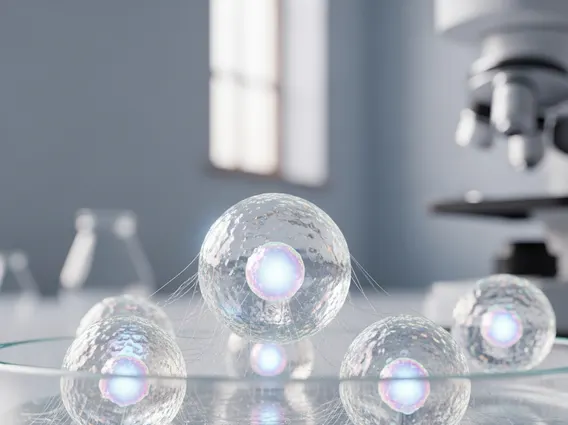
- Blastomeres: These are the cells produced by the initial cleavage divisions of the zygote. Up to the 8-cell stage in humans, each blastomere is considered totipotent. This means that if these cells were separated, each could potentially develop into a complete, separate organism, a phenomenon observed in the natural formation of identical twins.
Understanding totipotent stem cells explained their fundamental role in initiating and orchestrating the complex process of embryogenesis, laying the groundwork for all subsequent development. Their unique capacity ensures the comprehensive formation of both the embryo and its vital support systems.
Totipotent vs. Pluripotent Cells
The distinction between totipotent and pluripotent cells is crucial in developmental biology and stem cell research, as it defines different stages of cellular potential. While both types of cells possess significant developmental capabilities, their ultimate differentiation potential differs fundamentally, particularly regarding their ability to form extraembryonic tissues.
Pluripotent cells are those that can differentiate into any cell type derived from the three germ layers (ectoderm, mesoderm, and endoderm) that make up the embryo proper. This means they can form all tissues and organs of the body, such as nerve cells, muscle cells, blood cells, and skin cells. However, pluripotent cells cannot, on their own, develop into a complete organism because they lack the ability to form extraembryonic tissues like the placenta and umbilical cord, which are essential for supporting fetal growth. Examples of pluripotent cells include embryonic stem cells (ESCs), which are derived from the inner cell mass of a blastocyst, and induced pluripotent stem cells (iPSCs), which are artificially reprogrammed somatic cells.
Here’s a comparison to highlight the key differences:
| Characteristic | Totipotent Cells | Pluripotent Cells |
|---|---|---|
| Developmental Potential | Can form a complete organism, including all embryonic and extraembryonic tissues (e.g., placenta, umbilical cord). | Can form all cell types of the embryo proper (derived from ectoderm, mesoderm, endoderm) but cannot form extraembryonic tissues. |
| Examples | Zygote, blastomeres (up to the 8-cell stage). | Embryonic stem cells (ESCs), induced pluripotent stem cells (iPSCs). |
| Stage of Development | Very early embryonic stages (zygote to morula, typically within the first 3-4 days post-fertilization). | Blastocyst stage (inner cell mass), typically around 5-7 days post-fertilization, and can be maintained in culture. |
This distinction underscores the unique and transient nature of totipotency as the earliest and most versatile state of cellular potential, foundational for the entire developmental process. Pluripotency, while still highly versatile, represents a slightly more restricted, yet still immensely valuable, stage in cellular differentiation.