Enucleation
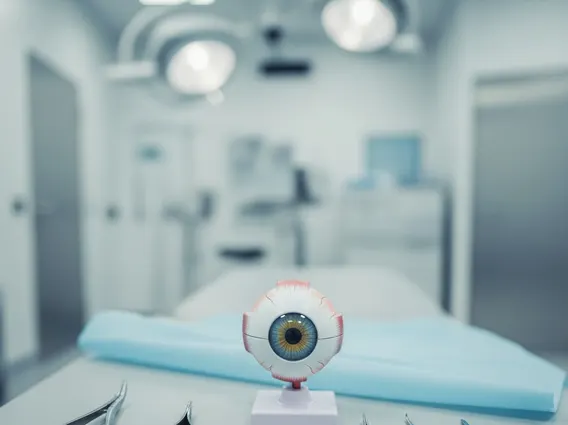
Enucleation is a surgical procedure involving the complete removal of the eyeball, while leaving the surrounding orbital tissues intact. This significant intervention is typically performed to address severe eye conditions that cannot be managed by less invasive means.
Key Takeaways
- Enucleation is the surgical removal of the entire eye, often necessary for severe disease or trauma.
- Common reasons for the procedure include intraocular tumors, irreparable trauma, and painful blind eyes.
- During the surgery, an orbital implant is usually placed to maintain volume and facilitate the fitting of a prosthetic eye.
- Recovery involves managing discomfort and swelling, followed by the custom fitting of an ocular prosthesis.
- Long-term care focuses on prosthetic maintenance and psychological support to adapt to the change.
What is Enucleation Surgery?
Enucleation refers to the surgical removal of the entire globe (eyeball) from the orbit, while preserving the eyelids, conjunctiva, and most of the orbital contents. This procedure is distinct from evisceration, which removes only the internal contents of the eye, leaving the scleral shell intact, and exenteration, which involves removing the eye along with surrounding tissues like eyelids and orbital fat.
The primary goal of enucleation surgery is often to alleviate severe pain, treat life-threatening conditions such as intraocular cancers, or manage eyes that are irreversibly damaged and non-functional. Following the removal of the eye, an orbital implant is typically placed within the socket to maintain orbital volume and provide a base for the future fitting of a prosthetic eye, ensuring a more natural cosmetic outcome.
Reasons for Eye Enucleation
There are several critical medical and traumatic reasons that necessitate enucleation. The decision to perform this surgery is made after careful consideration and usually when other treatment options have been exhausted or are deemed ineffective.
Common reasons for eye enucleation include:
- Intraocular Tumors: Malignant tumors such as retinoblastoma in children or choroidal melanoma in adults often require enucleation to prevent the spread of cancer and save the patient’s life. For instance, retinoblastoma, though rare, is the most common primary intraocular malignancy of childhood, with enucleation being a primary treatment for advanced cases.
- Severe Trauma: Irreparable damage to the eye due to severe injury, especially if associated with significant pain, infection, or the risk of sympathetic ophthalmia in the fellow eye, can lead to the need for enucleation.
- Painful Blind Eye: Conditions like absolute glaucoma, chronic uveitis, or severe end-stage ocular diseases can result in a permanently blind and painful eye that does not respond to medical management. Enucleation can provide significant pain relief and improve quality of life.
- Severe Infection: Uncontrolled intraocular infections (endophthalmitis) that do not respond to aggressive antibiotic treatment and threaten to spread beyond the eye may necessitate removal.
- Congenital Malformations: Rarely, severe congenital abnormalities of the eye that are non-functional, disfiguring, or pose a risk to the patient’s health may require enucleation.
The Enucleation Procedure and Recovery
The enucleation procedure explained involves several key steps performed under general anesthesia. The surgeon carefully detaches the eye muscles and severs the optic nerve, allowing for the complete removal of the eyeball. Immediately after removal, an orbital implant—often a spherical device made of porous material like hydroxyapatite or polyethylene—is inserted into the muscle cone within the eye socket. This implant helps to maintain the volume of the orbit, preventing a sunken appearance, and allows for some movement of the future prosthetic eye. The eye muscles are often attached to this implant to facilitate better movement. A temporary conformer, a clear plastic shell, is then placed in the socket to maintain the shape of the conjunctival fornices and prepare the socket for the permanent prosthesis.
Recovery after enucleation typically involves managing pain and swelling in the initial days following surgery. Patients may experience bruising around the eye, which gradually subsides. Pain medication is prescribed to manage discomfort. The temporary conformer remains in place for several weeks, and patients are given instructions on how to care for the socket and prevent infection. Approximately six to eight weeks after surgery, once the swelling has resolved and the tissues have healed, the patient is referred to an ocularist. The ocularist is a specialist who custom-designs and fits a prosthetic eye (also known as an artificial eye or ocular prosthesis). This custom-made shell is meticulously painted to match the remaining eye in color, detail, and size, providing a highly realistic and natural appearance. Regular follow-up appointments with the ophthalmologist and ocularist are essential for monitoring the health of the socket and ensuring the proper fit and maintenance of the prosthetic eye.