
Collarbone
The collarbone, medically known as the clavicle, is a vital long bone that forms part of the shoulder girdle. It plays a crucial role in connecting the upper limb to the axial skeleton, providing structural support and facilitating a wide range of arm movements.
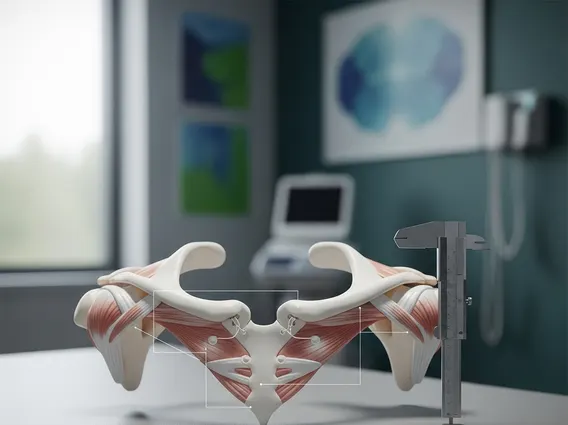
Key Takeaways
- The Collarbone, or clavicle, is an S-shaped long bone connecting the sternum to the shoulder blade.
- It is located horizontally across the top of the chest, just above the first rib.
- Its primary functions include supporting the shoulder, protecting underlying neurovascular structures, and transmitting forces from the arm to the trunk.
- The collarbone articulates with both the sternum (breastbone) and the scapula (shoulder blade).
- Due to its exposed position, the collarbone is one of the most commonly fractured bones in the human body.
What is the Collarbone (Clavicle)?
The Collarbone, also formally known as the clavicle, is a slender, S-shaped long bone that extends horizontally across the top of the chest. It is easily palpable just beneath the skin at the base of the neck. As a key component of the shoulder girdle, it serves as a strut that holds the shoulder joint away from the trunk, allowing the arm to have a wide range of motion. It is the only long bone in the body that lies horizontally.
This bone is critical for the proper positioning and movement of the arm. Its unique shape and position make it susceptible to injury, particularly fractures, which are common in both children and adults due to falls or direct impacts. Understanding its structure and role is fundamental to comprehending shoulder mechanics and injury patterns.
Collarbone Anatomy, Location, and Function
The Collarbone anatomy and function are intricately linked to its role in the shoulder complex. It is characterized by its distinct S-shape, which provides both strength and flexibility. The bone has two main ends: the medial (sternal) end, which is rounded and articulates with the manubrium of the sternum (breastbone), forming the sternoclavicular joint; and the lateral (acromial) end, which is flattened and articulates with the acromion process of the scapula (shoulder blade), forming the acromioclavicular joint.
The shaft of the clavicle is rough on its inferior surface, providing attachment points for various muscles and ligaments that stabilize the shoulder and neck. These attachments are crucial for maintaining the integrity of the shoulder girdle and enabling the complex movements of the upper limb.
Collarbone Location in Human Body
The Collarbone location in human body is superficial and prominent, extending horizontally across the upper anterior thorax. It spans from the top of the sternum (breastbone) at the midline to the lateral aspect of the shoulder, where it meets the acromion of the scapula. This position places it directly above the first rib and in front of the major neurovascular structures that supply the arm, including the brachial plexus and subclavian vessels.
Its strategic placement makes it a visible landmark and a critical part of the bony ring that forms the shoulder girdle, connecting the upper limb to the trunk. This connection is essential for both stability and mobility of the arm.
Purpose of the Collarbone
The Purpose of the collarbone is multifaceted, encompassing structural support, protection, and force transmission. It acts as a rigid strut, keeping the scapula and the arm away from the trunk, which allows for maximum freedom of movement of the upper limb. Without this strut, the shoulder would collapse medially, severely limiting arm function.
Key functions of the collarbone include:
- Shoulder Support: It provides the primary bony connection between the axial skeleton and the upper limb, supporting the weight of the arm.
- Protection: It shields underlying neurovascular structures, such as the brachial plexus and subclavian artery and vein, from direct trauma.
- Force Transmission: It transmits physical forces from the upper limb to the axial skeleton, particularly during activities like pushing or lifting.
- Muscle Attachment: It serves as an attachment site for several muscles that move the shoulder and neck, including the deltoid, pectoralis major, sternocleidomastoid, and trapezius muscles.
Its robust yet flexible design ensures that the shoulder can withstand significant stresses while maintaining a broad range of motion, which is vital for daily activities and athletic performance.



















