Breast Self Exam
A Breast Self Exam (BSE) is a personal health practice where individuals regularly examine their breasts to become familiar with their normal look and feel. This awareness is a crucial step in early detection, empowering individuals to identify potential changes that may warrant medical attention.
Key Takeaways
- A BSE helps you understand the normal state of your breasts, making it easier to notice changes.
- Regular self-exams are a complementary tool for breast health, not a replacement for clinical screenings.
- The exam involves both visual inspection and palpation (feeling) to check for abnormalities.
- Early detection of breast changes can significantly improve treatment outcomes.
- Consult a healthcare professional immediately if you find any unusual lumps, skin changes, or discharge.
What is a Breast Self-Exam and Its Importance
The Breast Self Exam (BSE) is a simple, non-invasive method for individuals to routinely check their own breasts for any changes or abnormalities. It’s about developing familiarity with your body, understanding what is normal for you, and recognizing when something might be different. While not a substitute for clinical breast exams or mammograms, it serves as an important first line of defense in personal breast health awareness, directly addressing what is Breast Self Exam.
Why Regular Checks Are Crucial
The importance of breast self exam lies in its ability to foster early detection. Regular self-checks help individuals become intimately acquainted with the unique characteristics of their breasts, including their texture, lumps, and overall appearance. This consistent self-monitoring allows for prompt identification of new or unusual changes, which can then be brought to a doctor’s attention. According to the World Health Organization (WHO), breast cancer is the most common cancer among women globally, underscoring the need for all available detection methods.
Benefits of Early Detection
Detecting breast changes early significantly improves the prognosis and treatment options. When breast cancer is found at an early, localized stage, the survival rate is substantially higher compared to when it has spread. For instance, the American Cancer Society reports that the 5-year relative survival rate for localized breast cancer is 99%. Early detection, supported by practices like BSE and clinical screenings, can lead to less aggressive treatments and better long-term health outcomes.
Step-by-Step Guide to Your Breast Self-Exam
Learning how to do a breast self exam effectively involves a combination of visual inspection and tactile examination. It’s recommended to perform the exam once a month, ideally a few days after your menstrual period ends when breasts are least tender and swollen. For those who are post-menopausal, choosing a consistent day each month is advisable. These breast self exam steps are designed to help you thoroughly check for any changes.
Visual Check
Begin your exam by standing in front of a mirror with your arms at your sides. Observe your breasts for any changes in size, shape, or symmetry. Look for dimpling, puckering, or bulging of the skin. Check for any changes in nipple position or if a nipple is inverted (turned inward). Next, raise your arms high overhead and look for the same changes. Finally, place your hands on your hips, pressing firmly to flex your chest muscles, and again observe for any alterations.
Palpation Methods
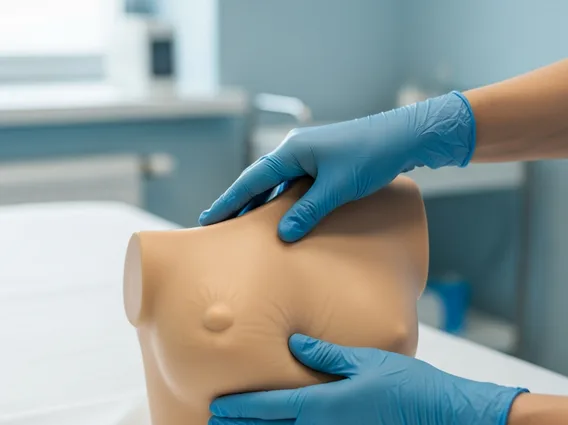
For the tactile part of the exam, you can perform it while lying down or in the shower. When lying down, place a pillow under your right shoulder and your right arm behind your head. Use the pads of the three middle fingers of your left hand to examine your right breast. Use light, medium, and firm pressure in a systematic pattern (e.g., circular, up-and-down, or wedge pattern) to cover the entire breast area, from your collarbone to the top of your abdomen, and from your armpit to your breastbone. Repeat for the left breast. In the shower, the wet, soapy skin allows your fingers to glide easily, making it simpler to feel for lumps, further detailing the breast self exam steps.
What to Look and Feel For
During your breast self exam steps, it’s essential to know what to check during breast self exam. You are looking for any new or unusual changes that persist:
- Lumps or Thickening: Feel for any new lumps, hard knots, or thickening in the breast or armpit area.
- Skin Changes: Note any dimpling, puckering, redness, scaling, or swelling of the skin.
- Nipple Changes: Look for a nipple that has turned inward, new tenderness, or any discharge (other than breast milk).
- Pain: While breast pain is common and often benign, persistent or new pain in one area should be noted.
If you discover any of these changes, it is important not to panic but to contact your doctor promptly for a professional evaluation.