
Biochemical Reactions
Biochemical reactions are fundamental processes occurring within living organisms, essential for sustaining life. These intricate chemical transformations drive metabolism, growth, and the maintenance of cellular functions.
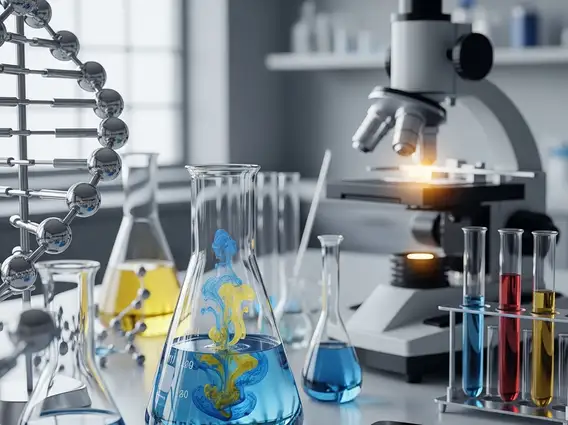
Key Takeaways
- Biochemical reactions are chemical processes within living cells that sustain life.
- They are categorized into anabolic (building up) and catabolic (breaking down) reactions.
- Enzymes act as biological catalysts, significantly speeding up these reactions.
- These reactions are crucial for energy production, nutrient synthesis, waste removal, and maintaining cellular homeostasis.
- Understanding these reactions is vital for insights into health, disease, and drug development.
What Are Biochemical Reactions?
At its core, what is Biochemical Reactions? They are the chemical reactions that take place inside the cells of living organisms. These reactions are responsible for virtually all life processes, from the simplest bacterial functions to the complex activities of human beings. Unlike chemical reactions in a laboratory, biochemical reactions occur under mild conditions (e.g., physiological temperature and pH) and are highly regulated. They involve a vast array of molecules, including proteins, carbohydrates, lipids, and nucleic acids, which are constantly being synthesized, broken down, and transformed.
These processes are often organized into metabolic pathways, where the product of one reaction becomes the reactant for the next, ensuring efficient and controlled cellular activity. Essentially, what are biochemical reactions? They are the molecular machinery that allows organisms to grow, reproduce, maintain their structures, and respond to their environments.
Types and How Biochemical Reactions Work
There are two primary types of biochemical reactions that form the basis of metabolism: anabolic and catabolic reactions. Anabolic reactions involve the synthesis of complex molecules from simpler ones, requiring an input of energy. For example, the synthesis of proteins from amino acids or carbohydrates from simpler sugars. Catabolic reactions, conversely, involve the breakdown of complex molecules into simpler ones, releasing energy in the process. A common example is the breakdown of glucose to produce ATP, the cell’s primary energy currency.
Understanding how biochemical reactions work largely involves recognizing the role of enzymes. Enzymes are biological catalysts, typically proteins, that accelerate the rate of these reactions without being consumed in the process. Each enzyme is highly specific, usually catalyzing only one or a few types of reactions involving specific substrates. They work by lowering the activation energy required for a reaction to proceed, making it possible for reactions to occur rapidly at body temperature. The interaction between an enzyme and its substrate forms an enzyme-substrate complex, leading to the formation of products and the regeneration of the enzyme.
The efficiency and specificity of enzymes are critical for maintaining cellular order and preventing wasteful side reactions. Without enzymes, most biochemical reactions would occur too slowly to sustain life.
The Importance of Biochemical Reactions
The importance of biochemical reactions cannot be overstated, as they are the very essence of life. These reactions underpin all physiological processes, from digestion and respiration to muscle contraction and nerve impulse transmission. They enable organisms to extract energy from nutrients, synthesize essential biomolecules, eliminate waste products, and repair damaged tissues. For instance, the continuous cycle of biochemical reactions ensures that cells have a constant supply of energy to perform their functions, maintain their structure, and respond to external stimuli.
Moreover, biochemical reactions are crucial for adaptation and survival. They allow organisms to adjust to changes in their environment, such as variations in nutrient availability or temperature. Disruptions in these pathways can lead to various diseases, highlighting their critical role in health. For example, metabolic disorders often stem from defects in specific enzymes or regulatory mechanisms governing biochemical reactions. Research into these reactions provides fundamental insights into disease mechanisms and helps in the development of new diagnostic tools and therapeutic interventions, ultimately enhancing our understanding of life itself.



















