
1
Consent Signed
Fill out our contact form and sign our consent form


Are you a patient diagnosed with ovarian cancer who is seeking innovative options? Massive Bio can help you to access the latest approaches with clinical trial matching.
Massive Bio has onboarded over 160,000 cancer patients to find their clinical trial
What is Ovarian Cancer?
Ovarian cancer is a type of cancer that starts in or near the ovaries, fallopian tubes, or primary peritoneum (the lining of the8 abdomen). Most ovarian cancer cases begin in the thin surface layer of the ovary, called the epithelium. Because of its complex origin, ovarian cancer disease can present in different forms and with varying symptoms.
Common types of ovarian cancer include:
While these epithelial cancers make up the majority of ovarian malignancies, there are also rare forms of ovarian cancer:
Signs and Symptoms of Ovarian Cancer
Recognizing the signs of ovarian cancer early can improve outcomes and help identify the disease before it spreads. The symptoms of ovarian cancer can be vague, which makes early detection challenging. However, there are several warning signs that should not be ignored:
If you are wondering how to detect ovarian cancer, regular gynecological checkups, pelvic imaging, and tumor marker testing are recommended for individuals at risk.
Staging in Ovarian Cancer:
Staging describes how far the cancer has spread and helps guide treatment. The FIGO system is the most commonly used and considers: the extent of the primary tumor, spread to nearby lymph nodes, and spread to distant sites.
Each stage has different implications for the ovarian cancer prognosis and ovarian cancer survival rate. For instance, stage 4 ovarian cancer require more intensive treatments. Clinical trials are continuously improving outcomes and offering tailored treatment options for ovarian cancer—including rarer forms like granulosa cell tumors—at all these stages.
Ovarian Cancer Treatment Options
Treatment depends on the cancer’s type and stage, whether it has spread, biomarker results (such as a BRCA mutation), your overall health, and—when relevant—your fertility preferences. Common ovarian cancer treatments include:

Ovarian cancer treatment is highly personalized, reflecting the tumor’s characteristics, the patient’s situation, and evolving research in the field. Emerging treatments and clinical trials exploring new chemotherapy regimens, targeted therapies, and immunotherapies offer additional hope for those affected.
Next-Generation Sequencing (NGS) is vital in linking patients with specific genetic mutations in their cancers to clinical trials for targeted treatments. This approach, part of personalized medicine, increases the effectiveness and success rates of these trials by ensuring patients receive therapies most likely to work for their particular cancer type.
Ovarian cancer, like many other types of cancer, can be associated with various genetic changes. These changes can affect oncogenes, tumor suppressor genes, and genes that are involved in DNA repair. Here are some of the key genes and genetic changes often associated with ovarian cancer:
Ovarian Cancer clinical trials play a crucial role in advancing the treatment options by evaluating the safety and efficacy of new therapies, surgical techniques, and diagnostic tools. Researchers design these trials to find more effective and less toxic treatments, improve quality of life, and increase ovarian cancer survival rates.
By joining a clinical trial, patients may access treatments that represent the future of ovarian cancer care.
Massive Bio provides a fast and free way to find clinical trials for ovarian cancer, tailored to each patient’s tumor type, biomarkers, and location. Whether you have early-stage disease or stage 4 ovarian cancer, our system can match you with appropriate studies to support your treatment journey.
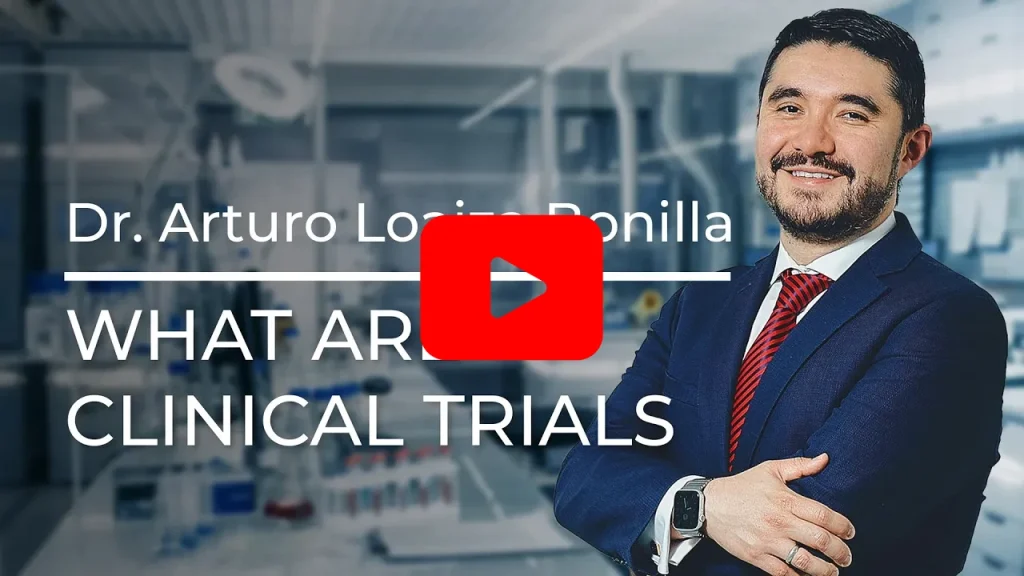
Cancer is an unfortunate reality that touches most of us at some point in our lives. If you or a loved one has cancer, you may have heard or read that clinical trials could offer access to innovative new options. But what exactly is a clinical trial? In this video, Massive Bio co-founder Arturo Loaiza-Bonilla, MD, explains how clinical trials work, what to expect if you enroll in one, and why a clinical trial can be an important option for many cancer patients.
We dream of the day when cancer disappears from our lives. Massive Bio is working tirelessly on achieving that goal.
What is Ovarian Cancer?
Ovarian cancer is a type of cancer that starts in or near the ovaries, fallopian tubes, or primary peritoneum (the lining of the8 abdomen). Most ovarian cancer cases begin in the thin surface layer of the ovary, called the epithelium. Because of its complex origin, ovarian cancer disease can present in different forms and with varying symptoms.
Common types of ovarian cancer include:
While these epithelial cancers make up the majority of ovarian malignancies, there are also rare forms of ovarian cancer:
Signs and Symptoms of Ovarian Cancer
Recognizing the signs of ovarian cancer early can improve outcomes and help identify the disease before it spreads. The symptoms of ovarian cancer can be vague, which makes early detection challenging. However, there are several warning signs that should not be ignored:
If you are wondering how to detect ovarian cancer, regular gynecological checkups, pelvic imaging, and tumor marker testing are recommended for individuals at risk.
Staging in Ovarian Cancer:
Staging describes how far the cancer has spread and helps guide treatment. The FIGO system is the most commonly used and considers: the extent of the primary tumor, spread to nearby lymph nodes, and spread to distant sites.
Each stage has different implications for the ovarian cancer prognosis and ovarian cancer survival rate. For instance, stage 4 ovarian cancer require more intensive treatments. Clinical trials are continuously improving outcomes and offering tailored treatment options for ovarian cancer—including rarer forms like granulosa cell tumors—at all these stages.
Ovarian Cancer Treatment Options
Treatment depends on the cancer’s type and stage, whether it has spread, biomarker results (such as a BRCA mutation), your overall health, and—when relevant—your fertility preferences. Common ovarian cancer treatments include:
Ovarian cancer treatment is highly personalized, reflecting the tumor’s characteristics, the patient’s situation, and evolving research in the field. Emerging treatments and clinical trials exploring new chemotherapy regimens, targeted therapies, and immunotherapies offer additional hope for those affected.
Next-Generation Sequencing (NGS) is vital in linking patients with specific genetic mutations in their cancers to clinical trials for targeted treatments. This approach, part of personalized medicine, increases the effectiveness and success rates of these trials by ensuring patients receive therapies most likely to work for their particular cancer type.
Ovarian cancer, like many other types of cancer, can be associated with various genetic changes. These changes can affect oncogenes, tumor suppressor genes, and genes that are involved in DNA repair. Here are some of the key genes and genetic changes often associated with ovarian cancer:
Ovarian Cancer clinical trials play a crucial role in advancing the treatment options by evaluating the safety and efficacy of new therapies, surgical techniques, and diagnostic tools. Researchers design these trials to find more effective and less toxic treatments, improve quality of life, and increase ovarian cancer survival rates.
By joining a clinical trial, patients may access treatments that represent the future of ovarian cancer care.
Massive Bio provides a fast and free way to find clinical trials for ovarian cancer, tailored to each patient’s tumor type, biomarkers, and location. Whether you have early-stage disease or stage 4 ovarian cancer, our system can match you with appropriate studies to support your treatment journey.
Cancer is an unfortunate reality that touches most of us at some point in our lives. If you or a loved one has cancer, you may have heard or read that clinical trials could offer access to innovative new options. But what exactly is a clinical trial? In this video, Massive Bio co-founder Arturo Loaiza-Bonilla, MD, explains how clinical trials work, what to expect if you enroll in one, and why a clinical trial can be an important option for many cancer patients.
We dream of the day when cancer disappears from our lives. Massive Bio is working tirelessly on achieving that goal.
Fill out our contact form and sign our consent form
We collect your medical records securely
Our expert nurses check clinical trials and contact you
We support you with appointments, travel, and accommodation
Fill out our contact form and sign our consent form
We collect your medical records securely
Our expert nurses check clinical trials and contact you
We support you with appointments, travel, and accommodation
We offer a quick, easy and FREE way to find ovarian cancer clinical research opportunities for patients like you. With our unique clinical trial matching system (CTMS) and team specialized in oncology, we can rapidly match you to a clinical research study for those diagnosed with ovarian cancer.
To enroll in clinical trial, you must meet highly specific criteria that’s established by the researchers who are conducting the investigation. That includes detailed information about type of cancer, treatment history, response to treatment, and other data that is collected in medical records.
If you are being treated for cancer or any other disease, your doctor should have a complete record of your medical care, including specific information about what form of the disease you have and what treatments you have received. Your patient relations coordinator will contact you and inform you about the details.
Massive Bio provides its services to the patients and their doctors at no cost—you won’t have to pay anything to receive a clinical-research matching report. There are no hidden costs involved.
Massive Bio strictly adheres to all HIPAA guidelines and international regulations focused on maintaining your privacy. We take extra measures to secure your personal information, ensuring it is protected beyond the mandatory requirements.
Your doctor may know of a clinical research study being conducted in your area that’s recruiting participants and is right for you. However, Massive Bio uses its artificial intelligence powered platform to match patients to clinical research studies that give you the best chance of a positive outcome and are being conducted in a geographical location that makes sense for you.
Yes, Massive Bio keeps your doctor up to date on your status throughout your participation.